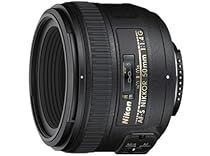
Mixed feelings

Intro
I was eagerly expecting this upgrade from Nikon since I have not been very pleased by the old AF-D version. The Nikon 50mm f/1.4D AF Nikkor Lens was a performant lens with careful handling and focusing of static or relatively static subjects. However for action shooting AF with the D version was lacking the kind of snap needed for those "razor sharp" details. Moreover very prone to flare and coma and with somewhat low contrast rendition of images the 50mm f/1.4 AF-D was never my lens of choice even for portraiture. During 2007 I got a Voigtlander 90mm f/3.5 APO Lanthar (in Nikon mount) manual focus that gave me the pleasure of portraiture as I wanted to be (really for the money that lens is awesome).
However having a better focusing less flare-prone high contrast 50mm prime was tempting and as rumours about an AF-S version started to appear I decided to sell my old f/1.4 and get the new AF-S version.
However even this upgrade did not entirely match my expectations. I try to detail below some of my findings.
Subject isolation sharpness DOF and bokeh
One of the reasons of getting a large aperture lens is isolation of subjects. Subject sharpness smooth transitions on D0F interval and pleasant bokeh (see below) is the triad that usually influence purchase of such lenses. I have another one: ease of use and reduced weight. The third: getting a prime that has usable AF on D40/D40x/D60 (yes this can be used). Moreover I am more and more tempted to use fixed focals for general photography and walkaround thus I lack a performant 35mm prime that will act as a normal focal for my D300 to use most of the time (like back in the old days of film when I was less lazy and spoiled by zooms).
The new 50mm f/1.4 does an excellent job at isolating the subject and sometimes you have to take a lot of care about focusing exactly on those portions of the image that you want to be sharp since even slight deviations might defocus quite severely. The custom stop difference for DOF blurring between a DX and FX is about one stop which means that a f/1.4 on DX achieves the kind of DOF that you will get with a f/2.0 lens on a FX. However those of you who wish to get that "magic almost 3D look of images" should keep in mind that this subjective perception of the image is a combination of subject isolation and peripheral perception of the eye of the blurred background - thus the higher the quality of the bokeh the better the "3D" look of the image.
Unfortunately the extreme sharpness of this lens - even wide open at f/1.4 - comes at a price a bokeh which in my opinion is not so pleasant. The Sigma 50mm f/1.4 EX DG HSM produces a better looking (smoother with no harsh artifacts due to diffraction on aperture rim) bokeh but with lower sharpness overall. In the end all comes to your personal preference: sharpness or excellent bokeh ? You cannot have both as a consequence of optical constraints. Nikon tried to launch a rasor-sharp wide opened prime (which it is) with good DOF capabilities within an optical formula and glass specs that do not generate a tremendous amount of smooth blurring of the background (bokeh). Please remember that depth of field only gives an estimate of blurring of a subject which is in the focus interval i.e. how blurred the image will be just outside the DOF interval. DOF does not correlate with the DEGREE of blurring of objects placed at SIGNIFICANT distance behind the subject in focus. If the background is far enough (which translates: outside the depth of field) and the subject if close (inside the hyperfocal distance) the DEGREE of blurring is related to the absolute physical size of the lens aperture. That's why the bokeh is better with large diameter glass and Sigma 50mm f/1.4 has "better" bokeh (smoother)than the 50mm AF-S. A basic rule of thumb (that you might consider in your "bokeh-oriented" purchases) when comparing lenses of same focal distance is that the quality of bokeh is directly proportional with the result of: (glass frontal element diameter)/(aperture value F). For example for a 50mm f/1.4 with a 25mm frontal element that proportion will yield apx. 18; for a 50mm f/1.4 lens with a 50mm frontal element the result would be apx. 35. You would expect a doubling of of the blur with such large glass.
However large frontal element and better blur comes at the price of heavy optics and more aberration-prone lens which translate in lower sharpness and reduced microcontrast. The 50mm f/1.4 AF-S Nikkor excels at sharpness and microcontrast (which is not the case of Sigma) thus you will have to choose based on your personal shooting preferences which lens to pick in the end. Maybe a Zeiss ?
Color accuracy
The lens is on the cool side and this means that colors will be perceived by your eyes as more natural. Remember that what our brain interpretes as pure white (and make you think "this is white") is something that has quite a lot of blue in it. This is why in bygone days they were adding blueish bleaching stuff when doing laundry: the sensation of perfect white.
However this slight tendency to the cold side has a consequence when shooting with flash: try to compensate a bit the color temp and make it a bit warmer otherwise soome magenta casts will appear especially in shadows.
Under natural light the color and contrast are almost perfect with well defined hues and very good to excellent separation of colors (something which the old 50mm AF-D did not display) and a wonderful absolutely wonderful microcontrast.
Used under overcast the lens will retrieve images that have a slightly dramatic "journalism-like" look with deep blues and blacks (excellent as density for printing) and well defined details.
The color rendition does not change with aperture values just your perception of better contrast will increase as the aperture narrows (due to increased sharpness per field).
Due to the relative small glass element diameters the lens behaves like a planar thus very low distorsion (close to absent) at the minimum shooting distance can be observed making it ideal for closeups. This is more obvious on DX format.
No vignetting observed by me both on DX and FX.
Build
The lens uses plastic but a very good quality one. Is bigger and heavier than the old AF-D (weight: 8.1 oz (230g) AF-D vs. 10.2 oz (290g) AF-S; length: 2.0 inch (50mm) AF-D vs. 2.1 inch (54.2mm) AF-S; diameter: 2.6 inch (66mm) AF-D vs. 2.9 inch (73.5mm) AF-S) but not as heavy as the Sigma (18.3oz (520g); 3.33in x 2.69in (84.5 mm × 68.2 mm) );
The focusing ring is acceptable damped but not for precision MF in my opinion.
Overall rating and conclusions
Yes I recommend buying this lens due to its exceptional sharpness wide open color rendition contrast and compactness. Moreover owners of D40/D40x/D60 finally have a cool prime they can use on their AF crippled cameras (no internal motor) which - I believe - is the primary reason this lens was launched on the market.
However bokeh lovers should look elsewhere in my opinion or carefully select scenes and compositions if they are looking for the ultimate blurring of the background. If I'd had enough to invest I would take both: the Sigma for the bokeh and more poetry in my images the AF-S for studio shooting sharpness and subject isolation.
The choice is yours.
Highly recommended.
Dec 22 2008 (I made myself a birthday present)
----------
Update: February 2nd 2010
Some updates on image quality. Actually not true one of the comments to my review in what concerns the bokeh on a full-frame. I have a D700 now and the bokeh of this lens at F/1.4 is far less pleasing even than the DX 35mm f/1.8 in DX mode on D700. By the way the 35 DX is one of the best lenses (image-wise in what concerns sharpness AND color rendition) I ever bought. Not to mention the stellar APO LANTHAR 90mm at 3.5 (a 90mm lens though) - unfortunately an extinct bird such a pity !
The issue is that physics cannot be cheated: large glass diameter = better bokeh. That's it. But this AF-S G 50mm has some other advantages especially on a FF. For example better focusing under incandescent light. Not dim incandescent (focus accuracy is heavily dependent on wavelength). Or as a perfect companion for going out "light" - reminds you of good old days of fixed focals. Or the very good correction of curvature (reacts almost as a PLANAR and recommend it for portraits) at the expense of CA of course - but this is easily correctable in pp. For example the sigma 50mm f/14 is very sharp but with a curvature that reminds of a 35 mm FF lens. Overall the most pleasant bokeh (IMO) on any Nikon lens is on the 200mmf/2. But that's another league. I am a lucky person: I have access to a wide array of lenses and I can test them. I hope I will have enough time to spend to post these opinions on my website. Finally would I buy this lens again knowing what I know now ? Of course. It is a very welcomed update in the aging nikon lens lineup.More detail ...


0 comments:
Post a Comment