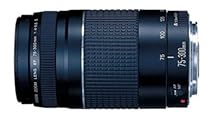
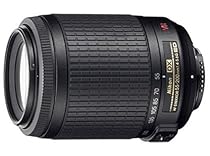
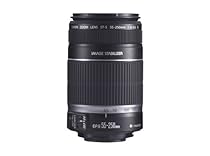
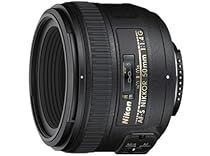
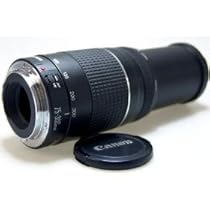
Canon EF 75-300mm f/4-5.6 III Telephoto Zoom Lens for Canon SLR Cameras

Canon EF 75-300mm f/4-5.6 III Telephoto Zoom Lens.

  • 75-300mm telephoto zoom lens with f/4-5.6 maximum aperture for Canon SLR cameras

  • Improved mechanism makes zooming smoother; front part of zoom ring sports silver ring

  • Measures 2.8 inches in diameter and 4.8 inches long; weighs 16.8 ounces; 1-year warranty

  • 4.9-foot closest focusing distance; 32- to 8-degree diagonal angle of view


More detail ...

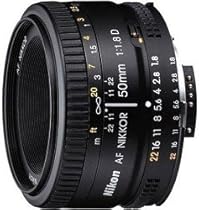
Nikon 50mm f/1.8D AF Nikkor Lens for Nikon Digital SLR Cameras

Nikon 50mm f/1.8D AF Nikkor Lens for Nikon Digital SLR Cameras

  • High-speed normal lens

  • Great for travel and for shooting full-length portraits in available light

  • Distortion-free images with superb resolution and color rendition

  • Provides high-contrast images even at maximum aperture


More detail ...

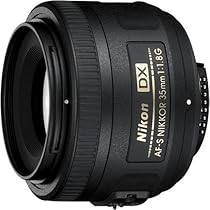
Nikon 35mm f/1.8G AF-S DX Lens for Nikon Digital SLR Cameras

Nikon 35mm f/1.8G AF-S DX Lens for Nikon Digital SLR Cameras

  • Engineered for Nikon DX-format digital SLRs - Optical formula optimized for use with Nikon DX-format digital SLRs

  • Aspherical lens element - Minimizes coma and other types of lens aberrations further improving image integrity

  • Nikon Super Integrated Coating (SIC) - Enhances light transmission efficiency and offers superior color consistency and reduced flare

  • Exclusive Nikon Silent Wave Motor (SWM) - Enables fast accurate and quiet autofocus

  • Close focusing to one foot for creative perspectives and versatility


More detail ...

Canon EF 50mm f/1.8 II Camera Lens

This is considered the standard lens for use with Canon SLR cameras

  • 50mm standard lens with f/1.8 maximum aperture

  • Traditional Gauss-type optical design is extremely sharp

  • Focuses as close as 18 inches for extreme close-ups

  • Ideal for natural-looking shots; excellent color balance

  • Measures 2.7 inches in diameter; 1-year warranty


More detail ...

Panasonic LUMIX G 20mm f/1.7 Aspherical Pancake Lens for Micro Four Thirds Interchangeable Lens Cameras


E-P1 owners your dream lens has arrived5

If you own an E-P1 you absolutely owe it to yourself to get this lens right now. I used to own the 17mm and loved its size but found the image quality lacking. There are plenty of detailed reviews of this 20mm lens out there so I'll spare the tech details.


I've had this for a little over a week and the performance is just amazing. Auto focus speed is very good not super speedy but definitely not slow. Images look sharp even wide open with lovely bokeh. It's not quite as nice as the Panasonic/Leica 25mm 1.4 for 4/3 but it is half the price and 1/4 of the size.


I have some good glass like the Olympus 50mm f2 and Olympus 14-52 mark II 2.8-3.5 via the adapter but those will probably stay on my E-620 since this Panasonic 20mm fits the E-P1 like a glove.


It's amazing how this lens makes the E-P1 come alive like no other lens I've used on it before.More detail ...

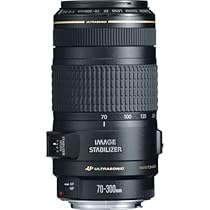
Canon EF 70-300mm f/4-5.6 IS USM Lens for Canon EOS SLR Cameras


Plain review in plain terms with sample shots4

The short version:


Pros:

The optical quality is great the speed is terrific and it compares well to the 70-200mm lens that people like to say blows this out of the water (I believe they are wrong - but we will get into that later) and finally the price cannot be beaten. Buy it.


Cons:

No hood extends as it zooms and the quality of the picture in low light situation lessens a little.


The long version:


I am writing this in simple terms. I found several several reviews on this lens but they were all in technical terms and leaves you scratching your head a little. So if you are like me maybe this review will help you.


I bought this lens a couple months ago from US1Photo.com (check these guys out. They regularly have significant sales and terrific customer service). I use this lens with a Canon 40D.


I take several types and styles of pictures so I needed a lens that would do the best job at several things and have a very affordable price (right at or less than $1000). I looked through new used third party (Tamron Sigma etc) lenses and read too many reviews and looked at too many images to count and spent four hours in a photography store playing with lenses before I decided to spend money and take advantage of this lens. All in all I spent about a week's worth of time in research and testing before I bought this lens.


---

Edit:

Okay so amazon won't let me put a link here. This is how you find me.

~Go to Flickr

~Then type in a "/" then "photos" then "/" and last type in "gman_five0"

And that should take you there.

---


Test of comment #1:

~The Canon EF 70-300mm f/4-5.6 IS USM does not track moving objects very well and the farther to the end of the zoom the slower the tracking.


(Flickr Gallery page 2)


This I have found to be completely wrong. I have used the lens at several sporting events and found that it tracks rather nicely. I was able to track every step of a base-runner from first base to second slide and recovery after the play without losing ONE shot.


To see what I am talking about check out my gallery on Flickr. The older ones are NOT done with this lens or camera and taken actually several years ago. I will reference the pictures in question.


Safe Got There By a Mile Breaking Up That Double Play (please note that as time goes on from the date that this was posted the pictures may have been re-moved). Also "Safe" was used instead of another shot taken at the same time and angle with a 70-200mm IS lens.


To take these shots I used "AI focus" and the "H" settings on my camera for quicker tracking and the H settings for about 6 frames per second.


Test of Comment #2:

~The 200-300mm range is nice in theory but a tack-sharp photo from the 70-200mm f/4L at 200mm is going to look better cropped than a 300mm full-frame photo from this lens.


Again I found this to be wrong. Though I have no actual "full sized" picture for this if you comment back with an email address then we can arrange a viewing of one. Otherwise take my word for it I own several lenses and this one stacks up well.


(Ref Flickr Gallery)


The pictures from the Dance Theater and Tashina were all taken at the 200-300mm focus lengths. Again they are not full sized because of photo pirates but if you email me we can see about full sized shots.


Test of Comment #3:

~The IS motor is loud


I do not know what these people are talking about but if you call that loud...

On the other hand I have heard (once) the sound of the IS motor but if you are not listening for it you will not even notice it.


Things I have found about the lens:


If you spend some time with the lens will be one of your best friends. It is a great lens especially for people on a budget (like me). To take the best pictures you cannot just twist it on and go to shooting. Take the time to LEARN about the lens (change shutter speeds ISO settings aperture white balances etc) and it will show you where it shines - just like the L series lenses and the 70-200mm IS.


This lens has a solid make and feels like it will last forever. Then again as you zoom the lens does extend and is plastic. So watch out if you are doing sports. You may get it knocked off. It did well for me though. Extending while zooming makes putting a hood on the lens a bit (very little; so little that you cannot tell) awkward and it looks kinda goofy.


I like the lens because it is not as bulky as the 70-200mm lens and it is extremely mobile. It is as quick as some other lenses not as quick as some and quicker than others. It will give you great quality pictures. It does have its limits however: in low light situations not being able to take it back a couple stops and get a wider aperture will not give you the same shot as a 70-200mm. Then again like I said it doesn't drop to that f/2.8 and does not cost all that money. This has been the single drawback for me about the lens.


I use this lens for portraits (Tashina Samantha) for sports (see gallery) and music (Shawn Pander - See Gallery). So it's pretty versatile. I have yet to use with it flash but that is because I simply do not like to use flash. I have yet to use it in a studio setting but when I do I will amend this review and add a couple of those pictures as well.


This lens comes highly recommended from me. I am not a big time highly paid or well known photographer. I just like to shoot and like what I shoot to be of the best quality that I can have AND afford at the time. So if you are like me and cannot spend the needed $1500 - $1700 on a 70-200mm IS lens then spend your money on this lens. You will not be sorry for it.

---


On another note comments are welcome. This is my first ever review on here so let me know if there anything else that you would like to know about and I will do my best to answer the question in the most plain terms as possible.

More detail ...

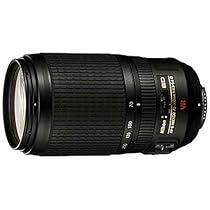
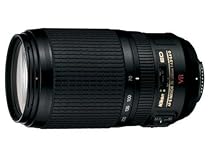
Nikon 70-300mm f/4.5-5.6G ED IF AF-S VR Zoom Nikkor Lens for Nikon Digital SLR Cameras


Very Nice Lens But it Has its Quirks4

After exhaustive research on many lens I finally decided to plunk down the $500+ (at the time this was written) to purchase this lens. It may not be the best on the market but it compliments my Nikon 18-70mm DX lens nicely. I was looking towards Nikon's 18-200mm DX lens however; the price pushed me to choose this one (as it was nearly half the price and my two lens can nearly cover all the range of the one 18-200mm).


QUALITY/WEIGHT:


build quality is cheap yet sturdy... the plastic is a little chinky but cuts down on the weight. My Nikon D200 has no problem handling the lens weight however; I have heard (unconfirmed) reports that this lens is a little heavy for the lighter cameras (D80 D70 D40 ETC). The Ring Connector is metal and has a rubber gasket on the outside so as to provide minor protection (for the lens mount) from the elements.


You also have to keep this in mind when discussing weight quality & price; the bulk of the price of this lens is going into the glass elements (all 17 elements of them). It gets expensive when you place that many high-quality optics into a tube. I'm really not that surprised a the price although $400 price-range would probably be more suitable for this lens


FOCUSING/LENS ATTRIBUTES:


Focusing can be quite fast... at times. You'll find at the Max 300mm focal range that the lens has a pretty hard time auto-focusing in on a subject. At times it would focus pretty quick at the 300mm range while at others it cannot focus at all. You can get around this quirk by bringing the subject into near focus (manually) then letting the auto-focus take over; it works every time. I find this focus problem disappointing especially given the price of this lens.


The quality of the Bokeh (Out of focus areas of the photograph) is very nice and pleasing. The images are sharp vignetting (dark areas in the corner of your photos) is hard to find and lens flare rarely a problem.


VIBRATION STABILIZATION:


All I can say is that it works... it can come in handy. It's not going to stop the image guaranteed for you; it's only meant to slow down the rate at which the camera moves (vibration from holding). You can notice the difference; with it off you'll see that the image (at say 300mm) really bouncing around; then you flick on VR. It takes a sec or two but then the image smooths out it still wobbles around but much more slowly.


With VR enabled you can usually go 2-3 (sometimes 4) stops down then what you'd normally be able to do when hand holding.


THE "SHOCK" TEST:


I haven't "shock tested" my lens yet (IE dropped it) but I have heard (again unconfirmed reports here) that it holds up pretty well to a drop... although I would never recommend testing that out.


IMPORTANT NOTE:


The 70-300mm range should be noted: Although the lens states that it is a 70-300mm zoom this lens was intended for a 35mm camera or full-frame CCD/CMOS sensor Digital Camera. All (or at least the majority) of Nikon's DSLR (D200 D80 ETC) are NOT Full-Frame sensors. They are approximately 1.5x factor of a full-frame sensor (due to the smaller sensor size).


What does this all mean?


Well it's simple since this is a 35mm lens and not a DX lens (ie built to account for the 1.5x factor in most nikon digitals) you have to apply the 1.5x conversion. This means that the Nikon 70-300mm on a Nikon DSLR will give an apparent zoom equivalent to a 105-450mm lens. I actually do not mind this apparent zoom and this should also cut down on vignetting; as what the lens projects onto the sensor is larger then the area of the sensor itself. In short: parts of the image spills over the sensor since this lens was meant to project onto a full-frame sensor/35mm film.


CONCLUSION:


Pros:

Pleasing Bokeh

Fast Auto-Focus (when working properly)

Vignetting is minimal

Image Stabilization (VR)

Flare is minimal

1.5x factor (105-450mm) makes for nice zoom

Colors are very good


CONS:

Plastic Casing

Near Inability to Auto-Focus at 300mm range

Price (even though it is cheaper then the 18-200mm DX)

1.5x factor (105-450mm) might make it more zoom then you need

Lens could be faster (F/4 would have been nice)


I love this lens even for it's quirks however; you may want to wait till it drops in price a little more (it falls almost bi-weekly). It may not be the fastest on the market but it's size optics image quality and VR make this a must have lens for Serious Nikon users!More detail ...

Canon EF 75-300mm f/4-5.6 III Telephoto Zoom Lens for Canon SLR Cameras


Is this lens as bad as some people say it is?3

No it's not especially if you take into account its intended users. If you use a Canon digital SLR and are satisfied with the kit lens (18-55) then buying this lens can be the perfect next step for you. Practically speaking you will be able to increase your zoom reach to the point where you can A) photograph birds in moderately distant trees B) be able to zoom in on the other side of a valley and frame something of your interest. Those are just two examples. One thing you will NOT be able to do effectively with this lens however is to take sport shots with it. How so? Consider some of the following weakness:


*At 300mm zoom range the highest aperture is limited to 5.6 (You will have to use very slow shutter speed to snap fast action shots; remember the inverse relation between aperture and shutter speed.)

*The lens size/weight combination makes it hard to hold steady when attached to a camera like the Rebel XT

*Slow and often inaccurate auto focus (I just don't understand why Canon makes a USM version of this lens for $20 more but never includes it in the triple rebate program)

*Chromatic aberration is significant in high contrast lighting like in full sun (if you do not know what Chromatic aberration means search the term online or check out my review of the Canon 28mm 2.8 on Amazon but to summarize it would be a discoloration at the fringes of objects in your picture)


Those kinds of weakness will limit your ability to use this lens in all sorts of other situations/circumstances. As a practical rule to follow if the lighting is less than ideal this lens will give you a hard time. Meaning it will be possible to use it but you may get too many blurry images because of shake from slow shutter speeds. As for what are ideal lighting conditions? That would be full sun with few or no clouds and with the light bathing your subject/object from the front or the side.


So is this lens that bad? Not really as with many other lenses when the lens is coupled with a good camera it still out performs most Point and Shoot cameras. Plus it provides results at par or slightly below the kit lens (18-55). So if you are satisfied with your kit lens which provides you with a zoom range comparable to 3X zoom (55/18= 3) why not add another lens that will expand your zoom range by another 4X (300/75=4)? Nothing wrong with expanding your horizon!


PS. TWO MORE POINTS ABOUT USING THIS LENS: First if you're confident you can handhold this lens at slow shutter speeds (I know I can't) then the low maximum aperture shouldn't be a major problem. Second if you're fine shooting at high ISO (more like 400 or 800) then again the low maximum aperture shouldn't be a problem. The nice thing about photography is that you can do one thing in so many ways so don't be afraid to explore with this lens!More detail ...

Canon EF 50mm f1.4 USM Standard & Medium Telephoto Lens for Canon SLR Cameras


Why spend more?5

With the 50mm f1.8 lens available for less than a hundred dollars why spend so much more to get the f1.4? The answer is you may not need to. It all depends on your seriousness budget and how long you need your lens to last.


If you want a "starter lens" for shooting at 50mm (or with prime lenses in general) the f1.8 would be a great buy. 50mm is a very useful and intuitive focal length to spend some time with because it sees the world at the same distance as your naked eye (regardless of your camera's crop factor). So you could buy the f1.8 cheaply regard it as a "play with it" lens and get a nice introduction to "prime lens quality." The f1.8 will seem like a substantial step up from kit lenses and most consumer-priced zooms and amazing bang for few bucks.


So if the f1.8 is such a great bargain why would the f1.4 be among Canon's most all-time popular lenses? It's that the f1.8 can take the great shot within certain conditions but the f1.4 delivers within a much wider range of conditions. In other words "You get what you pay for" and we'll save the best for last.


Affordable-but-Solid Contruction: The f1.4 will likely have a much longer life than the cheaper plastic build of the f1.8 and retain more resale value. It's an investment rather than a commodity. And it'll be more certain on your camera and in your hand. (My first one finally needed some calibration after 80000 shots and extreme wear-and-tear from frequent swapping with my other primes.) Users sometimes report the front glass falling out of their f1.8s. For the f1.4 the main issues revolve around the Micro USM focus motor which is not as sturdy as true USM.


Focus Versatility: The f1.4 lets your camera autofocus and then lets you tweak further by hand without flipping a switch - that's called "Full-Time Manual Focus." The f1.8 requires switching back and forth between auto and manual focus. The f1.8 is famously noisy/buzzy during autofocus has a bare-minimum focus ring and no distance scale. The f1.4 will autofocus more reliably especially in dim light though it will fail occasionally when starved.


Resistance to Abberation: Chromatic abberation (fringe colors) and barrel distortion are evident-but-low for both lenses at wide apertures - that's "prime lens quality." But in comparison tests the f1.8 is more susceptible to vignetting (shadows around the corners) halation (glowing around the highlights) and lens flare. For instance lens flare within the f1.4 tends to be more tightly controlled - "in focus" - whereas a bright light source is more like to blow out the whole shot in the f1.8. All these factors improve when stopped down but lag about a stop behind the f1.4.


Color: However if the f1.8 catches up at f/8 to the f1.4 by many standards it rarely catches up to the f1.4's saturation. The f1.4 has "proper-to-strong" color richness at all but the widest apertures while the f1.8's shots are much more likely to require postwork. (I do however get better saturation from my 24mm f2.8 and 100mm Macro f2.8. The 50 f1.4's saturation seems good-not-great by comparison.)


"Headroom": The engineering of both lenses lets you choose the tradeoff between "most possible light" or "most possible clarity." It's by design that you can choose "more light for less crisp" or stop down for sharpness. *Samples vary* but the average 50mm f1.4 should consistently "get down to sharp" more quickly "sharp enough" by f/2.0 "very very sharp" by f/2.8 (often exceeding the professional 24-70mm f2.8 L when wide open) and delivering "unreal sharp" by f/4. (I saw insane "specks of mascara sharpness" at f/3.5 from my first f1.4.) Again the f1.8 will probably lag about a stop behind that curve.


My second 50mm f1.4 performed even better than my first right out of the box "marginally sharp" at f/1.4 and increasingly beyond reproach by f/1.8-2. (At f/1.4-1.6 it suffers only from halation and some light fall-off in darker areas.) So if extreme sharpness is necessary for you shop with a strategy that will let you return your lens or get it calibrated if not up to your needs. My guess is that my first one was more typical out of the box but it approached the performance of the second after calibration.


(It's also worth noting that the premium-priced 50mm f1.2L is drastically more sharp (and better performing generally) at wide apertures but *less* sharp at f/2.8 through f/8. The f1.4 is a better "walkaround" performer than the f1.2L lens that costs four times as much.)


Regarding light return specifically my own experience in lens-swapping baffled me until I read other reports that the f1.4 exposes a third of a stop brighter than most other Canon lenses. It's brighter in the viewfinder generally and really IS a whole stop "faster" than the f1.8 at maximum apertures (i.e. the same net exposure at half the shutter speed). If you're willing to sacrifice some clarity that extra stop can make a huge difference when you're challenged by moving targets in low light.


(For instance shooting "wide open" for performers in dim venues. Faster shutter for less motion blur. More light for better color. And the edges may be soft at 100% magnification but *relatively* clear compared to the out-of-focus background. That "illusion of clarity" isn't as likely to print very well but resizes very snappily for the web.)


So the f1.8 can certainly produce some stunning images particularly in general daylight photography OR tightly-controlled conditions OR stopped down but is less adaptable to challenging circumstances that the f1.4.


"The Best for Last...":


Now with both these lenses you get the advantage of marvelously wide aperture which can be used for a tight focal plane that lets the background (or foreground distractions) fall quickly out of focus. This is of course a cornerstone of creative photography and both lenses give you plenty to explore. (In practice even f/2.8 delivers a pretty shallow depth of field in close-up shots so these wider lenses give you even more room to play.)


However there is such a thing as "blur quality" called "bokeh" based on the number of aperture blades within the lens. The f1.8 has five and the f1.4 has eight. The f1.8 will portray out-of-focus lights more pentagonally the f1.4 more roundly. (In focus those same lights will be eight-pointed stars with the f1.4 ten-pointed with the f1.8 - odd numbers of blades double the number of points.) But most importantly the blur from the f1.8 can be rather "choppy" especially at wide apertures while the f1.4's is consistently more "buttery smooth."


In other words there's more to quality than sharpness - there's also quality where your shot is LESS than sharp. And this is where the f1.4 becomes "a favorite lens" for some people even at over three times the price of its diminuitive counterpart.


Make no mistake the f1.8 would make an excellent "starter" lens. But the f1.4 is an exceptionally *serious* lens. Are you still learning to love photography? Then $80 is a fine price to pay for a lens you might outgrow. Or do you already love photography? Then $300 is a worthy price for a true investment that will reliably pay off. So they're both bargains just buy what's best for you.


(Addendum - Canon also sells a 50mm f2.5 Macro lens around $250. If you NEED macro it's reportedly pretty good and for general purpose as well. But it's a) not even as fast as the f1.8 b) more difficult to manually focus than the f1.4 and c) not as creamy in the bokeh with six aperture blades instead of eight. And Canon's 100mm version is drastically more practical for macro work and better performing generally. But the 50mm Macro does become a contender at a "middle price" if what you really need is one decent lens to do as many different things as possible though none of them as well.)More detail ...

Nikon 55-200mm f/4-5.6G ED IF AF-S DX VR [Vibration Reduction] Zoom Nikkor Lens


Incredible Bargain - Sharp Lens with VR for $250!5

This lens is sharp even at wide apertures the VR (image stabilization) works great autofocus speed is more than acceptable and it it is very light and compact. The fact that it costs $250 and has effective VR is pretty amazing - no other company offers a lens with this feature for anywhere near this price.


As for image quality search the various internet photo sites such as dpreview and nikonians for sample photos taken with this lens by real users. The results are impressive! My copy produces similar results. The previous reviewer must have a bad sample.


Of course the lens is slow (like almost all consumer zoom lenses) in that its widest aperture is smaller than a professional zoom or prime lens so it's not a good choice for action photography in lower light conditions (like indoor sports without flash or outside sports at dusk). But a fast telephoto zoom will cost at least three times as much and weigh a ton.

I give the lens 5 stars based on a combination of image quality value and compactness/lightness.More detail ...

Nikon 50mm f/1.8D AF Nikkor Lens for Nikon Digital SLR Cameras


One of the best lens for portrait and low light photography.5

I don't even know where to start. This lens produces sharp pictures and great color and contrast. And for its price (which seems to climb recently) it is worth more than 5 stars rating. I initially get this lens for low light action and sport photography (as this lens is famous for being one of the fastest lens together with its brother 50mm f/1.4) but I also found out that this lens is also perfect for portrait and other general purposes (macro etc). This is definitely a very versatile lens.


As much as I want to encourage everyone to buy this lens right away let me mention some of the limitation that you would see (which I think will be helpful to go over before deciding to buy this lens):


First being a prime lens you will need to move your feet a lot to compose your picture. If you are used to zoom lens don't underestimate this limitation. It takes me a while to get used to it and sometime I still find people looking at me wondering why I am moving forward and backwards. the good news is that most of the time they don't think I'm weird but they are actually wondering if I'm a professional photographer.


Secondly the focal range of 50mm which is considered the normal lens and great for portrait lens. but on many DSLRs which is not full frame (unless you have a full frame Nikon DSLR like the D700 or D3 then 50mm is 50mm) this lens become a 75mm equivalent which is in the border of a short tele lens. I actually like the 75mm equivalent though I often have to move backwards when taking picture of a group of people.


Third in some situation the autofocus might not able to focus (which is common for many other lens too). It is hard for the autofocus to lock when aiming at a wall that is one color (usually black or white) or on a clear sky (day or night). This kind of makes sense to me actually. IN these situations the AF assist light doesn't help either so you can opt for manual focus or set the focus to infinity when you can't find focus lock on scenic/landscape or sky photography. So far I don't have many problems with the autofocus.


Sharpness increases as you stop down to f/2.2 or f/2.5. I actually use f/1.8 most of the time and the results are still nice. Personally I'd rather use f/1.8 aperture settings than stopped down (e.g to f/2.8) and compensate with higher ISO setting which often gives me grainy picture. But if your object is not moving (static) then it is better to stop down to f/2.8 or more.


If you are wondering whether you should get a fast lens or a lens with VR (Vibration Reduction) here's my take: In overall VR does help a lot (as it will reduce camera shake) and will produce better/sharper picture than equivalent lens without VR (especially if the object is static). If the object is moving (sports/action) then VR feature alone might not help (depending on how fast the object is moving and how much light is available) and a fast lens often end up being a far better solution even without VR feature as it will allow much faster shutter speed to freeze motion. Using tripod (and a remote) will substitute for the need of VR feature. In general I would recommend getting a fast lens with VR feature (and usually it is expensive) such as the 70-200 f/2.8 VR but if one can only get for one or the other then find out what do you want to use the lens for and then use the guideline mentioned here.


If you are wondering whether you will get the benefit of buying f/1.4 lens over a f/1.8 lens just remember that the f/1.4 lens is about 60% faster than f/1.8 at its widest aperture setting. With this information you can decide if the additional speed will justify the additional cost. The bokeh is nicer as well in f/1.4 lens but I think speed is usually the main factor in deciding whether to get the more expensive f/1.4 lens.


Here are the summary of pros and cons for this Nikon 50mm f/1.8D AF lens:


Pros:

1. Very fast (f/1.8)

2. Very sharp pictures (especially when stopped down to f/2.2 f/2.5 or more.)

3. Great for sport/action photography

4. Great for indoor and low light situation

5. Great for portrait

6. Bokeh is almost as good as many expensive Nikon tele-lens

7. Fast autofocus

8. Good for wedding photography (or no-flash event). However if this is your main objective then you might want to get the 50mm f/1.4 version or 28-70mm f/2.8 lens)

9. 75mm equivalent which can be considered a short tele lens (I actually like the fact that it's 75mm equivalent vs 50mm in DSLR. if you need more zoom you can get the Nikon 85mm f/1.8 or the 70-200mm f/2.8 VR). If you have full frame DSLR(like the D3 or D700) then this #9 pros is not applicable.

10. Inexpensive


Cons:

1. Being prime lens you need to move your feet a lot to adjust/compose

2. Autofocus issue on some situations (read detail above)

3. Plasticy build

4. Autofocus is not the most silent but very reasonable

5. 75mm equivalent with 1.5x multiplier on non full frame DSLR (many people find this is an odd range for normal lens. I actually like it). If you have full frame DSLR(like the D3 or D700) then this #5 cons is not applicable.

6. Autofocus does not work with D40 D40x D60 and D5000. The newer 50mm f/1.4G AF-S lens or 35mm f/1.8G AF-S lens will autofocus with those cameras.


Bottom line: This lens is so versatile (and inexpensive) that I think everyone should own in addition to all the lenses that they already have. Being a very fast lens it enables me to take pictures in low light (sport/action photography) that I otherwise wouldn't be able to do.

After knowing its limitation I would predict that 99% of you that decides to buy this lens will find this lens very useful. And if you decide that you don't like it (which I think not more than 1%) I'm sure there will be a lot of people who wouldn't mind buying it from you (with some discount of course).


Again I would recommend everyone to get this lens. In some ways I can say that this lens makes me a better photographer.


Happy Photographing!


Sidarta TanuMore detail ...

Canon EF 50mm f/1.8 II Camera Lens


Sharp fast inexpensive5

Once upon a time the 50 mm lens was THE standard camera lens and was THE optical benchmark by which manufacturers were judged and compared. Although the basic lens focus has now shifted (at least at the low to mid amateur level) to zooms - you can still benefit from years of research and development that went into designing the 50 mm lens and this here lens may be the best lens dollar for dollar that you can ever buy. The question is can you afford not to own this lens?


Years of development have brought us a lens that has a fast aperture of 1.8 - far faster than any consumer zoom lens - and that is sharp as a filed tack. Be forewarned about the sharpness . . . if you are taking pictures of people this lens is unyielding in its sharpness and may well surprise you and your subjects whose every blemish is captured. The lens has a fabulously shallow depth of field if you want to use the 1.8 aperture to blow out a background. This lens is also ridiculously inexpensive. It is not USM - so it is a little loud. It does not have a moving focus scale. For the money though - this is heaven.


As to the build quality - yes it is plastic. No it's not built like the Rock of Gibraltar. If you are going to give this lens extensive use as your everyday lens and you shoot a lot it may not hold up all that well as one reviewer suggests. However I've now had this lens and used it fairly regularly (although not as the primary lens) for about 8 years and it is still in great condition. In my mind spend the $$ on this first before you go and drop $330 on the 50mm 1.4 USM lens and I think you'll find it gets the job done nicely and that the extra $250 on the 1.4 may not be worth the difference in build (major difference) speed (minor difference) and image quality (minor difference).More detail ...

Canon EF-S 55-250mm f/4.0-5.6 IS Telephoto Zoom Lens for Canon Digital SLR Cameras


I Love It For IS and Zoom Range at this Price Not Pure Performance5

I was determined to love this lens based on the specs and price point alone. Canon really needed to come out with this lens at this price because Nikon offers a very decent Vibration Reduction lens at roughly the same range for the same price leaving me to make apologies for Canon and their neglect to all my Nikon friends.


The IS can be switched off to save battery life but I haven't noticed a difference in battery performance with it. The IS is only activiated when you press the shutter halfway for auto focus. Although it FEELS like there is a small lag for the IS to start I don't think I've had any photos messed up because of it.


You can HEAR the IS. A little bizarre after using point and shoots that have IS that is silent but it doesn't seem to affect performance


Pro: Great price for an image stabilized zoom lens. I paid 299 and am very pleased even though Amazon is selling it for 280 a week later. ALso arrive 2 months sooner than Amazon initially promised. This lens has NEVER been 400 dollars. Its MSRP from Canon prior to release was 299.00. Shame Amazon!


Pro: Images are very sharp.


Pro: Image stabilization does a VERY nice job. Four stops as advertised by Canon? I'm not so sure. GREATLY enhancing the composition experience at 250mm? Absolutely.


Pro: Much smaller and lighter than the 70-300 of any manufacturer and much sharper than my Sigma 70-300.


Con: Cheapish feel. But just use it quit feeling it already. Plastic mount. But if you NEED a metal mount may I suggest you are being a little rough with your camera. *UPDATE* The plastic flanges on back were able to hold the camera securely to the lens but NOT hold the rear cap securely to the lens. I've tried many different rear lens caps that fit snugly on other lenses. So I think this is beyond cheap feel and has to be called CHEAP BUILD.


Con: This lens is a little (ok maybe not so little) slow to focus in dim light sometimes it misses altogether when I think other lenses of mine would have had no difficulty.


Con: I never gave Inner Focusing much thought on my other lenses until I used this. The front of this lens rotates AND moves in and out a LOT while focusing so much so that you MAY even want to recompose your shot. The length of this lens changes almost an inch across the focus range. I just checked my Sigma 70-300 and found that it does also but I've never seen it make as much difference in the viewfinder as I have with this Canon. Your perception may vary.


This lens and the soon to be arriving 18-55 IS as the XSi kit lens will allow me to carry one less lens to achieve an 18-250 IS range. For a little more money than the cost of both lenses you can get the Tamrom 18-250 but not have Image Stabilization. And now Sigma has an 18-200 WITH Optical Stablization for about what these 2 lenses cost retail but in testing the 2 Canons produced better images.


Conclusion: A great EF-S lens for Canon users. (even if Nikon had to force Canon to make it for us.)More detail ...

Canon EF-S 18-55mm f/3.5-5.6 IS SLR Lens


Great lens especially for the very low price5

PROS

* Very sharp across the image even wide open.

* Low Chroma. I read a test ([...]) that found higher than normal amounts of CA in this lens at some apertures but I don't see it. My standard test is to shoot bare tree limbs on bright sunny days & look for purple fringing especially at the edges. I'm not seeing anywhere near the level of fringing shown in some of their test shots.If anything I'd call it "low" I read elsewhere that one of Canon's goals in adding the aspherical element to this lens was to reduce CA so I'm thinking maybe the lens tested in photozon.de was just a bad apple.

* Image Shake control works. I can't attest to how often it provides a full 4 stops worth of shake reduction but I can see a very clear result when using it.

* Fast accurate focusing. One of the reasons I purchased this lens was because I was dissatisfied with the performance of my (more expensive) Sigma 17-35 EX (the newer model) which while sharp is just too slow and inaccurate a focuser for close work in action sports. The new Canon solved that problem.

* Compact light weight & unobtrusive. Not much bigger than a normal lens.

CONS

* Barrel Distortion at 18mm (28mm) While not exsessive for an inexpensive lens this is one area where you will see benefit from spending hundreds of dollars for a much more expensive Canon "IS" or "L" or buying a fixed focal length lens. In most real world situations it wasn't all that noticeable. I could usually correct for it in Photoshop but this is not a lens for critical architectural work etc. I have taken hundreds of photos with this lens and barrel distortion has only called attention to itself a few times. I suspect this is one price paid for the very compact design.

* Not very fast. Another area where an "L" has an edge. At F3.5 28mm equivalent and F5.6 85mm this lens is relatively slow compared to a pro lens. This effects stopping the action in low light. OTH you will have to spend hundreds more to get a usable top speed of F 2.8 and that is *only* one stop faster at 28mm equiv. I think both this lens' sharpness and the IS system mitigate this "Con." It took me a while to learn that I could shoot wide open at all focal lengths without having the outer third of the image turn to mush.That's pretty amazing for a zoom at this price. You don't have a stop or two you almost never use because it is too soft. And the IS system works well in low light though that doesn't figure in in stopping the action.

* Does not have that red stripe. Sad to say some will never buy this sharp handy little lens because in is not an "L" and/or doesn't cost $[...]. Yes it does does look a little "plasticy" probably doesn't have the build quality for heavy everyday use by a real working pro and does not look massive mounted on your camera body like a "fast" pro lens that's squeezing out that last F stop. But IMO it looks very similar to Canon's newer IS lenses so there is no scarlet letter immediately identifying you as "cheap." In other words "Get over it."


So why did Canon produce such a good lens at such a bargain price? I'd say that it's because Nikon announced their intention to do the same a little while ago. Also Canon's old non IS 18-55mm lens had the rep of being something of a dog. Finally several competing cameras now have IS built into the body. Canon had to respond with a sharp IS lens that they could put on the Rebels & the 40D. In terms of sales the low end of the DSLR market is both hot and very competitive. We're the beneficiaries.More detail ...

Nikon 50mm f/1.4G SIC SW Prime Nikkor Lens for Nikon Digital SLR Cameras


Mixed feelings4

Intro

I was eagerly expecting this upgrade from Nikon since I have not been very pleased by the old AF-D version. The Nikon 50mm f/1.4D AF Nikkor Lens was a performant lens with careful handling and focusing of static or relatively static subjects. However for action shooting AF with the D version was lacking the kind of snap needed for those "razor sharp" details. Moreover very prone to flare and coma and with somewhat low contrast rendition of images the 50mm f/1.4 AF-D was never my lens of choice even for portraiture. During 2007 I got a Voigtlander 90mm f/3.5 APO Lanthar (in Nikon mount) manual focus that gave me the pleasure of portraiture as I wanted to be (really for the money that lens is awesome).

However having a better focusing less flare-prone high contrast 50mm prime was tempting and as rumours about an AF-S version started to appear I decided to sell my old f/1.4 and get the new AF-S version.

However even this upgrade did not entirely match my expectations. I try to detail below some of my findings.


Subject isolation sharpness DOF and bokeh

One of the reasons of getting a large aperture lens is isolation of subjects. Subject sharpness smooth transitions on D0F interval and pleasant bokeh (see below) is the triad that usually influence purchase of such lenses. I have another one: ease of use and reduced weight. The third: getting a prime that has usable AF on D40/D40x/D60 (yes this can be used). Moreover I am more and more tempted to use fixed focals for general photography and walkaround thus I lack a performant 35mm prime that will act as a normal focal for my D300 to use most of the time (like back in the old days of film when I was less lazy and spoiled by zooms).

The new 50mm f/1.4 does an excellent job at isolating the subject and sometimes you have to take a lot of care about focusing exactly on those portions of the image that you want to be sharp since even slight deviations might defocus quite severely. The custom stop difference for DOF blurring between a DX and FX is about one stop which means that a f/1.4 on DX achieves the kind of DOF that you will get with a f/2.0 lens on a FX. However those of you who wish to get that "magic almost 3D look of images" should keep in mind that this subjective perception of the image is a combination of subject isolation and peripheral perception of the eye of the blurred background - thus the higher the quality of the bokeh the better the "3D" look of the image.

Unfortunately the extreme sharpness of this lens - even wide open at f/1.4 - comes at a price a bokeh which in my opinion is not so pleasant. The Sigma 50mm f/1.4 EX DG HSM produces a better looking (smoother with no harsh artifacts due to diffraction on aperture rim) bokeh but with lower sharpness overall. In the end all comes to your personal preference: sharpness or excellent bokeh ? You cannot have both as a consequence of optical constraints. Nikon tried to launch a rasor-sharp wide opened prime (which it is) with good DOF capabilities within an optical formula and glass specs that do not generate a tremendous amount of smooth blurring of the background (bokeh). Please remember that depth of field only gives an estimate of blurring of a subject which is in the focus interval i.e. how blurred the image will be just outside the DOF interval. DOF does not correlate with the DEGREE of blurring of objects placed at SIGNIFICANT distance behind the subject in focus. If the background is far enough (which translates: outside the depth of field) and the subject if close (inside the hyperfocal distance) the DEGREE of blurring is related to the absolute physical size of the lens aperture. That's why the bokeh is better with large diameter glass and Sigma 50mm f/1.4 has "better" bokeh (smoother)than the 50mm AF-S. A basic rule of thumb (that you might consider in your "bokeh-oriented" purchases) when comparing lenses of same focal distance is that the quality of bokeh is directly proportional with the result of: (glass frontal element diameter)/(aperture value F). For example for a 50mm f/1.4 with a 25mm frontal element that proportion will yield apx. 18; for a 50mm f/1.4 lens with a 50mm frontal element the result would be apx. 35. You would expect a doubling of of the blur with such large glass.

However large frontal element and better blur comes at the price of heavy optics and more aberration-prone lens which translate in lower sharpness and reduced microcontrast. The 50mm f/1.4 AF-S Nikkor excels at sharpness and microcontrast (which is not the case of Sigma) thus you will have to choose based on your personal shooting preferences which lens to pick in the end. Maybe a Zeiss ?


Color accuracy

The lens is on the cool side and this means that colors will be perceived by your eyes as more natural. Remember that what our brain interpretes as pure white (and make you think "this is white") is something that has quite a lot of blue in it. This is why in bygone days they were adding blueish bleaching stuff when doing laundry: the sensation of perfect white.

However this slight tendency to the cold side has a consequence when shooting with flash: try to compensate a bit the color temp and make it a bit warmer otherwise soome magenta casts will appear especially in shadows.

Under natural light the color and contrast are almost perfect with well defined hues and very good to excellent separation of colors (something which the old 50mm AF-D did not display) and a wonderful absolutely wonderful microcontrast.

Used under overcast the lens will retrieve images that have a slightly dramatic "journalism-like" look with deep blues and blacks (excellent as density for printing) and well defined details.

The color rendition does not change with aperture values just your perception of better contrast will increase as the aperture narrows (due to increased sharpness per field).

Due to the relative small glass element diameters the lens behaves like a planar thus very low distorsion (close to absent) at the minimum shooting distance can be observed making it ideal for closeups. This is more obvious on DX format.

No vignetting observed by me both on DX and FX.


Build

The lens uses plastic but a very good quality one. Is bigger and heavier than the old AF-D (weight: 8.1 oz (230g) AF-D vs. 10.2 oz (290g) AF-S; length: 2.0 inch (50mm) AF-D vs. 2.1 inch (54.2mm) AF-S; diameter: 2.6 inch (66mm) AF-D vs. 2.9 inch (73.5mm) AF-S) but not as heavy as the Sigma (18.3oz (520g); 3.33in x 2.69in (84.5 mm × 68.2 mm) );

The focusing ring is acceptable damped but not for precision MF in my opinion.


Overall rating and conclusions

Yes I recommend buying this lens due to its exceptional sharpness wide open color rendition contrast and compactness. Moreover owners of D40/D40x/D60 finally have a cool prime they can use on their AF crippled cameras (no internal motor) which - I believe - is the primary reason this lens was launched on the market.


However bokeh lovers should look elsewhere in my opinion or carefully select scenes and compositions if they are looking for the ultimate blurring of the background. If I'd had enough to invest I would take both: the Sigma for the bokeh and more poetry in my images the AF-S for studio shooting sharpness and subject isolation.


The choice is yours.


Highly recommended.


Dec 22 2008 (I made myself a birthday present)


----------


Update: February 2nd 2010


Some updates on image quality. Actually not true one of the comments to my review in what concerns the bokeh on a full-frame. I have a D700 now and the bokeh of this lens at F/1.4 is far less pleasing even than the DX 35mm f/1.8 in DX mode on D700. By the way the 35 DX is one of the best lenses (image-wise in what concerns sharpness AND color rendition) I ever bought. Not to mention the stellar APO LANTHAR 90mm at 3.5 (a 90mm lens though) - unfortunately an extinct bird such a pity !


The issue is that physics cannot be cheated: large glass diameter = better bokeh. That's it. But this AF-S G 50mm has some other advantages especially on a FF. For example better focusing under incandescent light. Not dim incandescent (focus accuracy is heavily dependent on wavelength). Or as a perfect companion for going out "light" - reminds you of good old days of fixed focals. Or the very good correction of curvature (reacts almost as a PLANAR and recommend it for portraits) at the expense of CA of course - but this is easily correctable in pp. For example the sigma 50mm f/14 is very sharp but with a curvature that reminds of a 35 mm FF lens. Overall the most pleasant bokeh (IMO) on any Nikon lens is on the 200mmf/2. But that's another league. I am a lucky person: I have access to a wide array of lenses and I can test them. I hope I will have enough time to spend to post these opinions on my website. Finally would I buy this lens again knowing what I know now ? Of course. It is a very welcomed update in the aging nikon lens lineup.More detail ...

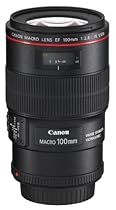
Canon EF 100mm f/2.8L IS USM 1-to-1 Macro Lens for Canon Digital SLR Cameras


Best macro lens by far5

I love Canon. Although there were times when I shot with Nikons (D700 D300) and were pretty impressed with the result I always came back to Canon.

This is the first is macro lens for Canon and they got it right. I have used the 60mm 100mm & 180mm macro before and by far this is the best!

Now if you already own a 100mm macro you should try it before upgrading because the IQ of the lens are identical. I usually use this lens for portraits (yes I know the 85mm & 135mm is a better portrait lens.) of my daughter and the IS is awesome. Hand holding 1/40 I can still get a sharp picture.


The thing that I really hated about the non-IS 100mm macro was the distribution of weight - it was the most awkward thing to shoot with. This lens feels lighter because of the even distribution of weight and size (gradual taper) and it includes a deep hood.


I know $1K is a hefty sum of cash but considering what you get and how long it can last you - I don't know why you would settle for the non-IS.


--- Edit ---


I found that for portrait the bokeh on this thing is incredibly smooth. Instead of the angular blurs (lights flowers etc) you get a smooth circular blurs due to its spherical diaphragm. But I guess that's in the eye of the beholder...More detail ...

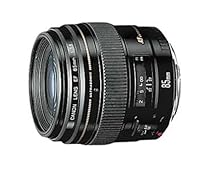
Canon EF 85mm f/1.8 USM Medium Telephoto Lens for Canon SLR Cameras


A Real Lens!5

October 2006 Update:

I thought I owed this Lens review an update after shooting with it for almost a couple of years and having the pleasure of shooting with a variety of L Lenses: 70-200L 16-35L Fisheye 50mm and the Kit lens. This is what I've found:


1) Bar none the best "portrait" lens I own. There's just something about this 85mm focal length + f/1.8 that brings out detail....faces have so much dimension with this lens they look 3 dimensional. When I want to get shots of my daughter that amaze I use this lens. When I look at my picture archive on my computer I can easily spot the ones taken with this 85mm. My friends some of which who don't know much about photography pick pictures taken with this lens as their favorites - they ask wow how did you get that picture? I have a few blown up pictures to 16x20 and 11x14 of my daughter for my parents from this lens which are magnificent.


2) I thought that when I bought my 70-200L I would never use my 85mm again I was wrong. I routinely find myself putting on the 85mm and shooting pictures with it. Also Its much lighter and less imposing than my 70-200L so when I just want amazing portraits don't need the higher 200mm and don't want the weight and want a real shallow depth of feel and out of focus backgrounds I go for the 85mm.


3) I also have a 16-35mm L which I use quite a bit for inside shots and panoramas which stays on my camera most of the time but there's just a special look to the longer mm rating that you get which makes portraits just work better with the 85mm - so when I take off the 16-35 I usually mount this 85mm.


4) I really thought that between the 16-35mm L and the 70-200L I'd never ever use the 85mm I was wrong. There are wonderful advantages to this lens which make it a keeper for me....the construction on this lens has held up very well after years it looks brand new. I do have a UV/Haze filter that I use as a protector I got from Amazon (about $25) - great value.


There's allot to be said for a non "L" lens which consistently winds up on my camera when I own several "L"s which cover the mm of this lens. To me its an L: built like an L color and saturation comparable to an L It's my "L" lens that doesn't have a red stripe.


Original Review:

I bought a 20D recently with the 18-55mm kit lens and to start out I bought a 50mm f/1.8 lens which really got me interested in the faster f/stops to blur backgrounds and take pictures in lower light. My kit lens was not fast enough (hard to blur background and hard to take pictures in low light) and both the kit lens and 50mm lens did not have Ultrasonic which made me miss focus more often with moving targets.


I looked quite a bit and found the 85mm f/1.8 lens. Although Amazon only had a few reviews the photography forums I found were buzzing about how this lens should've been labeled an L lens. Pros might know why but 90% of the reviews I read said it was comparable to an L lens in quality and that it was very affordable.


I bought this lens and I have to tell you I was very impressed with it right from the start. On construction its heavier than the kit lens and the plastic 50mm II lens. It has a metal mount and very solid construction. If you look through it you can see allot of glass which tells you it has a wide aperture and consequently its much heavier than the kit lens or 50mm lens. But...its heavy in a good way. It balances the camera and makes it look like a real camera.


So what's good about this lens? For one you can take great pictures in low light with the f/1.8. I photographed a stage play handheld with this lens and no flash (non allowed) and I got tremendous results. Ultrasonic helped with every picture in focus and all very sharp with vibrant colors very nice saturation and I used ISO 400 and I could even freeze the action on stage.


As a portrait lens it really can blow the backgrounds into a very nice buttery blokeh and with the Ultrasonic - I haven't missed focus once. Its also wonderful for inside pictures with no flash. The F/1.8 is really versatile.


A few notes. If you're going to get a 70-200 L zoom lens you might wind up not using this lens as much but for parties its allot less intimidating than a big white lens. I hear this lens was designed a long time ago and not really designed for digital and that some strange effects can be seen with it on digitals. I have not gone looking nor experienced any of these. Its just a tremendous value at $350. I was not able to use this lens as a macro as it was not designed as such but I have thought of putting an extension tube on it to see what I get but haven't done so yet.


Constructed Solid. Solid feel smooth focusing ring distance window autofocus with a real Ring USM. Five Stars! Amazon shipped fast on this for me - Great store.More detail ...

Canon EF 70-300mm f/4-5.6 IS USM Lens for Canon EOS SLR Cameras


Plain review in plain terms with sample shots4

The short version:


Pros:

The optical quality is great the speed is terrific and it compares well to the 70-200mm lens that people like to say blows this out of the water (I believe they are wrong - but we will get into that later) and finally the price cannot be beaten. Buy it.


Cons:

No hood extends as it zooms and the quality of the picture in low light situation lessens a little.


The long version:


I am writing this in simple terms. I found several several reviews on this lens but they were all in technical terms and leaves you scratching your head a little. So if you are like me maybe this review will help you.


I bought this lens a couple months ago from US1Photo.com (check these guys out. They regularly have significant sales and terrific customer service). I use this lens with a Canon 40D.


I take several types and styles of pictures so I needed a lens that would do the best job at several things and have a very affordable price (right at or less than $1000). I looked through new used third party (Tamron Sigma etc) lenses and read too many reviews and looked at too many images to count and spent four hours in a photography store playing with lenses before I decided to spend money and take advantage of this lens. All in all I spent about a week's worth of time in research and testing before I bought this lens.


---

Edit:

Okay so amazon won't let me put a link here. This is how you find me.

~Go to Flickr

~Then type in a "/" then "photos" then "/" and last type in "gman_five0"

And that should take you there.

---


Test of comment #1:

~The Canon EF 70-300mm f/4-5.6 IS USM does not track moving objects very well and the farther to the end of the zoom the slower the tracking.


(Flickr Gallery page 2)


This I have found to be completely wrong. I have used the lens at several sporting events and found that it tracks rather nicely. I was able to track every step of a base-runner from first base to second slide and recovery after the play without losing ONE shot.


To see what I am talking about check out my gallery on Flickr. The older ones are NOT done with this lens or camera and taken actually several years ago. I will reference the pictures in question.


Safe Got There By a Mile Breaking Up That Double Play (please note that as time goes on from the date that this was posted the pictures may have been re-moved). Also "Safe" was used instead of another shot taken at the same time and angle with a 70-200mm IS lens.


To take these shots I used "AI focus" and the "H" settings on my camera for quicker tracking and the H settings for about 6 frames per second.


Test of Comment #2:

~The 200-300mm range is nice in theory but a tack-sharp photo from the 70-200mm f/4L at 200mm is going to look better cropped than a 300mm full-frame photo from this lens.


Again I found this to be wrong. Though I have no actual "full sized" picture for this if you comment back with an email address then we can arrange a viewing of one. Otherwise take my word for it I own several lenses and this one stacks up well.


(Ref Flickr Gallery)


The pictures from the Dance Theater and Tashina were all taken at the 200-300mm focus lengths. Again they are not full sized because of photo pirates but if you email me we can see about full sized shots.


Test of Comment #3:

~The IS motor is loud


I do not know what these people are talking about but if you call that loud...

On the other hand I have heard (once) the sound of the IS motor but if you are not listening for it you will not even notice it.


Things I have found about the lens:


If you spend some time with the lens will be one of your best friends. It is a great lens especially for people on a budget (like me). To take the best pictures you cannot just twist it on and go to shooting. Take the time to LEARN about the lens (change shutter speeds ISO settings aperture white balances etc) and it will show you where it shines - just like the L series lenses and the 70-200mm IS.


This lens has a solid make and feels like it will last forever. Then again as you zoom the lens does extend and is plastic. So watch out if you are doing sports. You may get it knocked off. It did well for me though. Extending while zooming makes putting a hood on the lens a bit (very little; so little that you cannot tell) awkward and it looks kinda goofy.


I like the lens because it is not as bulky as the 70-200mm lens and it is extremely mobile. It is as quick as some other lenses not as quick as some and quicker than others. It will give you great quality pictures. It does have its limits however: in low light situations not being able to take it back a couple stops and get a wider aperture will not give you the same shot as a 70-200mm. Then again like I said it doesn't drop to that f/2.8 and does not cost all that money. This has been the single drawback for me about the lens.


I use this lens for portraits (Tashina Samantha) for sports (see gallery) and music (Shawn Pander - See Gallery). So it's pretty versatile. I have yet to use with it flash but that is because I simply do not like to use flash. I have yet to use it in a studio setting but when I do I will amend this review and add a couple of those pictures as well.


This lens comes highly recommended from me. I am not a big time highly paid or well known photographer. I just like to shoot and like what I shoot to be of the best quality that I can have AND afford at the time. So if you are like me and cannot spend the needed $1500 - $1700 on a 70-200mm IS lens then spend your money on this lens. You will not be sorry for it.

---


On another note comments are welcome. This is my first ever review on here so let me know if there anything else that you would like to know about and I will do my best to answer the question in the most plain terms as possible.

More detail ...

Nikon 70-300mm f/4.5-5.6G ED IF AF-S VR Zoom Nikkor Lens for Nikon Digital SLR Cameras


Very Nice Lens But it Has its Quirks4

After exhaustive research on many lens I finally decided to plunk down the $500+ (at the time this was written) to purchase this lens. It may not be the best on the market but it compliments my Nikon 18-70mm DX lens nicely. I was looking towards Nikon's 18-200mm DX lens however; the price pushed me to choose this one (as it was nearly half the price and my two lens can nearly cover all the range of the one 18-200mm).


QUALITY/WEIGHT:


build quality is cheap yet sturdy... the plastic is a little chinky but cuts down on the weight. My Nikon D200 has no problem handling the lens weight however; I have heard (unconfirmed) reports that this lens is a little heavy for the lighter cameras (D80 D70 D40 ETC). The Ring Connector is metal and has a rubber gasket on the outside so as to provide minor protection (for the lens mount) from the elements.


You also have to keep this in mind when discussing weight quality & price; the bulk of the price of this lens is going into the glass elements (all 17 elements of them). It gets expensive when you place that many high-quality optics into a tube. I'm really not that surprised a the price although $400 price-range would probably be more suitable for this lens


FOCUSING/LENS ATTRIBUTES:


Focusing can be quite fast... at times. You'll find at the Max 300mm focal range that the lens has a pretty hard time auto-focusing in on a subject. At times it would focus pretty quick at the 300mm range while at others it cannot focus at all. You can get around this quirk by bringing the subject into near focus (manually) then letting the auto-focus take over; it works every time. I find this focus problem disappointing especially given the price of this lens.


The quality of the Bokeh (Out of focus areas of the photograph) is very nice and pleasing. The images are sharp vignetting (dark areas in the corner of your photos) is hard to find and lens flare rarely a problem.


VIBRATION STABILIZATION:


All I can say is that it works... it can come in handy. It's not going to stop the image guaranteed for you; it's only meant to slow down the rate at which the camera moves (vibration from holding). You can notice the difference; with it off you'll see that the image (at say 300mm) really bouncing around; then you flick on VR. It takes a sec or two but then the image smooths out it still wobbles around but much more slowly.


With VR enabled you can usually go 2-3 (sometimes 4) stops down then what you'd normally be able to do when hand holding.


THE "SHOCK" TEST:


I haven't "shock tested" my lens yet (IE dropped it) but I have heard (again unconfirmed reports here) that it holds up pretty well to a drop... although I would never recommend testing that out.


IMPORTANT NOTE:


The 70-300mm range should be noted: Although the lens states that it is a 70-300mm zoom this lens was intended for a 35mm camera or full-frame CCD/CMOS sensor Digital Camera. All (or at least the majority) of Nikon's DSLR (D200 D80 ETC) are NOT Full-Frame sensors. They are approximately 1.5x factor of a full-frame sensor (due to the smaller sensor size).


What does this all mean?


Well it's simple since this is a 35mm lens and not a DX lens (ie built to account for the 1.5x factor in most nikon digitals) you have to apply the 1.5x conversion. This means that the Nikon 70-300mm on a Nikon DSLR will give an apparent zoom equivalent to a 105-450mm lens. I actually do not mind this apparent zoom and this should also cut down on vignetting; as what the lens projects onto the sensor is larger then the area of the sensor itself. In short: parts of the image spills over the sensor since this lens was meant to project onto a full-frame sensor/35mm film.


CONCLUSION:


Pros:

Pleasing Bokeh

Fast Auto-Focus (when working properly)

Vignetting is minimal

Image Stabilization (VR)

Flare is minimal

1.5x factor (105-450mm) makes for nice zoom

Colors are very good


CONS:

Plastic Casing

Near Inability to Auto-Focus at 300mm range

Price (even though it is cheaper then the 18-200mm DX)

1.5x factor (105-450mm) might make it more zoom then you need

Lens could be faster (F/4 would have been nice)


I love this lens even for it's quirks however; you may want to wait till it drops in price a little more (it falls almost bi-weekly). It may not be the fastest on the market but it's size optics image quality and VR make this a must have lens for Serious Nikon users! More detail ...

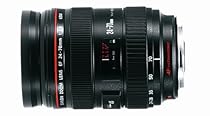
Canon EF 24-70mm f/2.8L USM Standard Zoom Lens for Canon SLR Cameras


A great general-purpose lens5

I've owned the 24-70mm for almost a year now. This lens has been a favorite of many since it replaced its well-regarded predecessor the 28-70mm. It shoots images that are very sharp and have excellent contrast and saturation. It's sharp wide open and only gets better when stopping down. The USM (Ultrasonic Motor) focuses very fast and full-time manual focusing is allowed. I've thought about buying a 50mm f/1.4 but the results from this lens are so good I'm having a hard time justifying the purchase. I've been nothing but pleased with the pictures I get from the 24-70mm. The constant f/2.8 aperture is great for shooting indoors and produces a very nice bokeh (background blur) when shooting portraits. This lens is much heavier than comparable consumer-grade zooms but I don't object to the weight. I actually like the heft and feel of this lens on my 20D. The only feature I wish it had is IS (image stabilization).


The one thing preventing an unqualified recommendation is the recent release of the Canon 24-105mm f/4.0L IS. The latter lens costs about the same and has some noteworthy advantages. It is .7" shorter .2mm narrower and .6 lbs. lighter. It has 3rd generation IS that gives you a 3-stop shutter speed advantage when shooting handheld. I know from my 70-200mm f/2.8L IS that image stabilization is a very welcome feature when shooting handheld at slow shutter speeds. And obviously the 24-105mm adds an extra 35mm of focal length on the long end.


The 24-70mm bests the 24-105mm in one way: It's a faster lens. That translates into the following advantages: At f/4.0 the 24-105mm cannot stop subject motion blur as well in low-light situations where the 24-70mm's f/2.8 can give you a shutter speed that is twice as fast. Note that IS does not have any impact at all on subject motion blur only on camera shake on your end. If bokeh (background blur) is important to you the 24-70mm will have a slight advantage over the 24-105mm given its wider aperture. A wider aperture also helps a camera focus a little better in low light.


The first run of the 24-105mm had a flare problem (see Canon's Web site for more info) and the early production models have been recalled. But the problem has now been fixed. You'll have to consider your photography priorities when deciding which of these two excellent lenses best suits your needs. You would be well served by either.More detail ...
Canon EF 75-300mm f/4-5.6 III Telephoto Zoom Lens for Canon SLR Cameras


Is this lens as bad as some people say it is? 3

No it's not especially if you take into account its intended users. If you use a Canon digital SLR and are satisfied with the kit lens (18-55) then buying this lens can be the perfect next step for you. Practically speaking you will be able to increase your zoom reach to the point where you can A) photograph birds in moderately distant trees B) be able to zoom in on the other side of a valley and frame something of your interest. Those are just two examples. One thing you will NOT be able to do effectively with this lens however is to take sport shots with it. How so? Consider some of the following weakness:


*At 300mm zoom range the highest aperture is limited to 5.6 (You will have to use very slow shutter speed to snap fast action shots; remember the inverse relation between aperture and shutter speed.)

*The lens size/weight combination makes it hard to hold steady when attached to a camera like the Rebel XT

*Slow and often inaccurate auto focus (I just don't understand why Canon makes a USM version of this lens for $20 more but never includes it in the triple rebate program)

*Chromatic aberration is significant in high contrast lighting like in full sun (if you do not know what Chromatic aberration means search the term online or check out my review of the Canon 28mm 2.8 on Amazon but to summarize it would be a discoloration at the fringes of objects in your picture)


Those kinds of weakness will limit your ability to use this lens in all sorts of other situations/circumstances. As a practical rule to follow if the lighting is less than ideal this lens will give you a hard time. Meaning it will be possible to use it but you may get too many blurry images because of shake from slow shutter speeds. As for what are ideal lighting conditions? That would be full sun with few or no clouds and with the light bathing your subject/object from the front or the side.


So is this lens that bad? Not really as with many other lenses when the lens is coupled with a good camera it still out performs most Point and Shoot cameras. Plus it provides results at par or slightly below the kit lens (18-55). So if you are satisfied with your kit lens which provides you with a zoom range comparable to 3X zoom (55/18= 3) why not add another lens that will expand your zoom range by another 4X (300/75=4)? Nothing wrong with expanding your horizon!


PS. TWO MORE POINTS ABOUT USING THIS LENS: First if you're confident you can handhold this lens at slow shutter speeds (I know I can't) then the low maximum aperture shouldn't be a major problem. Second if you're fine shooting at high ISO (more like 400 or 800) then again the low maximum aperture shouldn't be a problem. The nice thing about photography is that you can do one thing in so many ways so don't be afraid to explore with this lens! More detail ...

Nikon 18-200mm f/3.5-5.6G AF-S ED VR II Telephoto Zoom Lens for Nikon DX-Format Digital SLR Cameras


A very good lens at a reasonable price4

I believe it was Thom Hogan who described this lens as not perfect but really good at everything. That's the review in a nutshell.


This is what I would term a prosumer lens. It certainly is not cheap yet it does not have the build quality of Nikon's top-of-the-line. The barrel for example is plastic rather than metal. I fear that a drop would be catastrophic and even a hard bang on the edge of a table might do serious damage if the lens was fully extended. On the other hand this lens is a lot less expensive than those in the Nikon pro line. In addition the lens is much lighter and easier to carry than it would be were it made entirely of metal.


It is my understanding that the only meaningful difference between this lens (the VR II) and its immediate predecessor is the addition of a cam lock to prevent lens creep. My own sample doesn't creep at all even with the cam unlocked but apparently that has been a significant irritant for a number of buyers.


The use of "VR II" in the name is potentially misleading because it may lead shoppers to believe that the VR system has been improved over the original model. This is not the case. Both the original 18-200 and the new version contain Nikon's second generation VR system. Some have suggested that Nikon's marketing is a bit shady on this point while others counter that the "II" simply designates a new model.


Sharpness is less than absolute across the entire range but more than adequate for anything that an amateur or even most professionals is likely to need. There is mild to moderate distortion more marked at the focal length extremes but scarcely visible in the vast majority of images and readily correctable in Photoshop DxO or other post-processing software. Contrast is crisp and I find the lens surprisingly free of flaring and ghosting.


No one should buy this lens thinking that it will make him/her a better photographer. Good photography is in the mind and the eye not in camera. What the 18-200 will do though is provide a one-lens solution to the great majority of focal length needs minimizing the need to tote a hefty bag full of lenses. It happens that as a long time Nikon user I have such a bag. Despite all the choices at my disposal my 18-200 probably stays on my camera 85-90% of the time.


Folks who are obsessed with numbers charts and MTF curves will probably fret over the 18-200 taking delight in pointing out every little defect. For the rest of us the only significant downside that I see is that the lens is not ideally suited for extended service in rough environments or adverse weather situations. Since most of us seldom shoot in such circumstances this should not be much of a problem.


I heartily recommend the Nikon 18-200mm f/3.5-5.6 G AF-S ED VR II (whew! what a mouthful) to any advanced amateur or professional seeking a highly usable wide range zoom.More detail ...

Canon EF 50mm f1.4 USM Standard & Medium Telephoto Lens for Canon SLR Cameras


Why spend more?5

With the 50mm f1.8 lens available for less than a hundred dollars why spend so much more to get the f1.4? The answer is you may not need to. It all depends on your seriousness budget and how long you need your lens to last.


If you want a "starter lens" for shooting at 50mm (or with prime lenses in general) the f1.8 would be a great buy. 50mm is a very useful and intuitive focal length to spend some time with because it sees the world at the same distance as your naked eye (regardless of your camera's crop factor). So you could buy the f1.8 cheaply regard it as a "play with it" lens and get a nice introduction to "prime lens quality." The f1.8 will seem like a substantial step up from kit lenses and most consumer-priced zooms and amazing bang for few bucks.


So if the f1.8 is such a great bargain why would the f1.4 be among Canon's most all-time popular lenses? It's that the f1.8 can take the great shot within certain conditions but the f1.4 delivers within a much wider range of conditions. In other words "You get what you pay for" and we'll save the best for last.


Affordable-but-Solid Contruction: The f1.4 will likely have a much longer life than the cheaper plastic build of the f1.8 and retain more resale value. It's an investment rather than a commodity. And it'll be more certain on your camera and in your hand. (My first one finally needed some calibration after 80000 shots and extreme wear-and-tear from frequent swapping with my other primes.) Users sometimes report the front glass falling out of their f1.8s. For the f1.4 the main issues revolve around the Micro USM focus motor which is not as sturdy as true USM.


Focus Versatility: The f1.4 lets your camera autofocus and then lets you tweak further by hand without flipping a switch - that's called "Full-Time Manual Focus." The f1.8 requires switching back and forth between auto and manual focus. The f1.8 is famously noisy/buzzy during autofocus has a bare-minimum focus ring and no distance scale. The f1.4 will autofocus more reliably especially in dim light though it will fail occasionally when starved.


Resistance to Abberation: Chromatic abberation (fringe colors) and barrel distortion are evident-but-low for both lenses at wide apertures - that's "prime lens quality." But in comparison tests the f1.8 is more susceptible to vignetting (shadows around the corners) halation (glowing around the highlights) and lens flare. For instance lens flare within the f1.4 tends to be more tightly controlled - "in focus" - whereas a bright light source is more like to blow out the whole shot in the f1.8. All these factors improve when stopped down but lag about a stop behind the f1.4.


Color: However if the f1.8 catches up at f/8 to the f1.4 by many standards it rarely catches up to the f1.4's saturation. The f1.4 has "proper-to-strong" color richness at all but the widest apertures while the f1.8's shots are much more likely to require postwork. (I do however get better saturation from my 24mm f2.8 and 100mm Macro f2.8. The 50 f1.4's saturation seems good-not-great by comparison.)


"Headroom": The engineering of both lenses lets you choose the tradeoff between "most possible light" or "most possible clarity." It's by design that you can choose "more light for less crisp" or stop down for sharpness. *Samples vary* but the average 50mm f1.4 should consistently "get down to sharp" more quickly "sharp enough" by f/2.0 "very very sharp" by f/2.8 (often exceeding the professional 24-70mm f2.8 L when wide open) and delivering "unreal sharp" by f/4. (I saw insane "specks of mascara sharpness" at f/3.5 from my first f1.4.) Again the f1.8 will probably lag about a stop behind that curve.


My second 50mm f1.4 performed even better than my first right out of the box "marginally sharp" at f/1.4 and increasingly beyond reproach by f/1.8-2. (At f/1.4-1.6 it suffers only from halation and some light fall-off in darker areas.) So if extreme sharpness is necessary for you shop with a strategy that will let you return your lens or get it calibrated if not up to your needs. My guess is that my first one was more typical out of the box but it approached the performance of the second after calibration.


(It's also worth noting that the premium-priced 50mm f1.2L is drastically more sharp (and better performing generally) at wide apertures but *less* sharp at f/2.8 through f/8. The f1.4 is a better "walkaround" performer than the f1.2L lens that costs four times as much.)


Regarding light return specifically my own experience in lens-swapping baffled me until I read other reports that the f1.4 exposes a third of a stop brighter than most other Canon lenses. It's brighter in the viewfinder generally and really IS a whole stop "faster" than the f1.8 at maximum apertures (i.e. the same net exposure at half the shutter speed). If you're willing to sacrifice some clarity that extra stop can make a huge difference when you're challenged by moving targets in low light.


(For instance shooting "wide open" for performers in dim venues. Faster shutter for less motion blur. More light for better color. And the edges may be soft at 100% magnification but *relatively* clear compared to the out-of-focus background. That "illusion of clarity" isn't as likely to print very well but resizes very snappily for the web.)


So the f1.8 can certainly produce some stunning images particularly in general daylight photography OR tightly-controlled conditions OR stopped down but is less adaptable to challenging circumstances that the f1.4.


"The Best for Last...":


Now with both these lenses you get the advantage of marvelously wide aperture which can be used for a tight focal plane that lets the background (or foreground distractions) fall quickly out of focus. This is of course a cornerstone of creative photography and both lenses give you plenty to explore. (In practice even f/2.8 delivers a pretty shallow depth of field in close-up shots so these wider lenses give you even more room to play.)


However there is such a thing as "blur quality" called "bokeh" based on the number of aperture blades within the lens. The f1.8 has five and the f1.4 has eight. The f1.8 will portray out-of-focus lights more pentagonally the f1.4 more roundly. (In focus those same lights will be eight-pointed stars with the f1.4 ten-pointed with the f1.8 - odd numbers of blades double the number of points.) But most importantly the blur from the f1.8 can be rather "choppy" especially at wide apertures while the f1.4's is consistently more "buttery smooth."


In other words there's more to quality than sharpness - there's also quality where your shot is LESS than sharp. And this is where the f1.4 becomes "a favorite lens" for some people even at over three times the price of its diminuitive counterpart.


Make no mistake the f1.8 would make an excellent "starter" lens. But the f1.4 is an exceptionally *serious* lens. Are you still learning to love photography? Then $80 is a fine price to pay for a lens you might outgrow. Or do you already love photography? Then $300 is a worthy price for a true investment that will reliably pay off. So they're both bargains just buy what's best for you.


(Addendum - Canon also sells a 50mm f2.5 Macro lens around $250. If you NEED macro it's reportedly pretty good and for general purpose as well. But it's a) not even as fast as the f1.8 b) more difficult to manually focus than the f1.4 and c) not as creamy in the bokeh with six aperture blades instead of eight. And Canon's 100mm version is drastically more practical for macro work and better performing generally. But the 50mm Macro does become a contender at a "middle price" if what you really need is one decent lens to do as many different things as possible though none of them as well.)More detail ...

Canon 5D and 30D Cameras Lenses and Accessories


[]More detail ...

Nikon 55-200mm f/4-5.6G ED IF AF-S DX VR [Vibration Reduction] Zoom Nikkor Lens


Incredible Bargain - Sharp Lens with VR for $250!5

This lens is sharp even at wide apertures the VR (image stabilization) works great autofocus speed is more than acceptable and it it is very light and compact. The fact that it costs $250 and has effective VR is pretty amazing - no other company offers a lens with this feature for anywhere near this price.


As for image quality search the various internet photo sites such as dpreview and nikonians for sample photos taken with this lens by real users. The results are impressive! My copy produces similar results. The previous reviewer must have a bad sample.


Of course the lens is slow (like almost all consumer zoom lenses) in that its widest aperture is smaller than a professional zoom or prime lens so it's not a good choice for action photography in lower light conditions (like indoor sports without flash or outside sports at dusk). But a fast telephoto zoom will cost at least three times as much and weigh a ton.

I give the lens 5 stars based on a combination of image quality value and compactness/lightness.More detail ...

Blog Archive