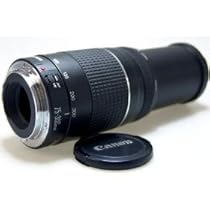
Canon EF 75-300mm f/4-5.6 III Telephoto Zoom Lens for Canon SLR Cameras


Is this lens as bad as some people say it is? 3

No it's not especially if you take into account its intended users. If you use a Canon digital SLR and are satisfied with the kit lens (18-55) then buying this lens can be the perfect next step for you. Practically speaking you will be able to increase your zoom reach to the point where you can A) photograph birds in moderately distant trees B) be able to zoom in on the other side of a valley and frame something of your interest. Those are just two examples. One thing you will NOT be able to do effectively with this lens however is to take sport shots with it. How so? Consider some of the following weakness:


*At 300mm zoom range the highest aperture is limited to 5.6 (You will have to use very slow shutter speed to snap fast action shots; remember the inverse relation between aperture and shutter speed.)

*The lens size/weight combination makes it hard to hold steady when attached to a camera like the Rebel XT

*Slow and often inaccurate auto focus (I just don't understand why Canon makes a USM version of this lens for $20 more but never includes it in the triple rebate program)

*Chromatic aberration is significant in high contrast lighting like in full sun (if you do not know what Chromatic aberration means search the term online or check out my review of the Canon 28mm 2.8 on Amazon but to summarize it would be a discoloration at the fringes of objects in your picture)


Those kinds of weakness will limit your ability to use this lens in all sorts of other situations/circumstances. As a practical rule to follow if the lighting is less than ideal this lens will give you a hard time. Meaning it will be possible to use it but you may get too many blurry images because of shake from slow shutter speeds. As for what are ideal lighting conditions? That would be full sun with few or no clouds and with the light bathing your subject/object from the front or the side.


So is this lens that bad? Not really as with many other lenses when the lens is coupled with a good camera it still out performs most Point and Shoot cameras. Plus it provides results at par or slightly below the kit lens (18-55). So if you are satisfied with your kit lens which provides you with a zoom range comparable to 3X zoom (55/18= 3) why not add another lens that will expand your zoom range by another 4X (300/75=4)? Nothing wrong with expanding your horizon!


PS. TWO MORE POINTS ABOUT USING THIS LENS: First if you're confident you can handhold this lens at slow shutter speeds (I know I can't) then the low maximum aperture shouldn't be a major problem. Second if you're fine shooting at high ISO (more like 400 or 800) then again the low maximum aperture shouldn't be a problem. The nice thing about photography is that you can do one thing in so many ways so don't be afraid to explore with this lens! More detail ...

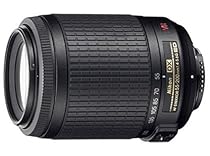
Nikon 18-200mm f/3.5-5.6G AF-S ED VR II Telephoto Zoom Lens for Nikon DX-Format Digital SLR Cameras


A very good lens at a reasonable price4

I believe it was Thom Hogan who described this lens as not perfect but really good at everything. That's the review in a nutshell.


This is what I would term a prosumer lens. It certainly is not cheap yet it does not have the build quality of Nikon's top-of-the-line. The barrel for example is plastic rather than metal. I fear that a drop would be catastrophic and even a hard bang on the edge of a table might do serious damage if the lens was fully extended. On the other hand this lens is a lot less expensive than those in the Nikon pro line. In addition the lens is much lighter and easier to carry than it would be were it made entirely of metal.


It is my understanding that the only meaningful difference between this lens (the VR II) and its immediate predecessor is the addition of a cam lock to prevent lens creep. My own sample doesn't creep at all even with the cam unlocked but apparently that has been a significant irritant for a number of buyers.


The use of "VR II" in the name is potentially misleading because it may lead shoppers to believe that the VR system has been improved over the original model. This is not the case. Both the original 18-200 and the new version contain Nikon's second generation VR system. Some have suggested that Nikon's marketing is a bit shady on this point while others counter that the "II" simply designates a new model.


Sharpness is less than absolute across the entire range but more than adequate for anything that an amateur or even most professionals is likely to need. There is mild to moderate distortion more marked at the focal length extremes but scarcely visible in the vast majority of images and readily correctable in Photoshop DxO or other post-processing software. Contrast is crisp and I find the lens surprisingly free of flaring and ghosting.


No one should buy this lens thinking that it will make him/her a better photographer. Good photography is in the mind and the eye not in camera. What the 18-200 will do though is provide a one-lens solution to the great majority of focal length needs minimizing the need to tote a hefty bag full of lenses. It happens that as a long time Nikon user I have such a bag. Despite all the choices at my disposal my 18-200 probably stays on my camera 85-90% of the time.


Folks who are obsessed with numbers charts and MTF curves will probably fret over the 18-200 taking delight in pointing out every little defect. For the rest of us the only significant downside that I see is that the lens is not ideally suited for extended service in rough environments or adverse weather situations. Since most of us seldom shoot in such circumstances this should not be much of a problem.


I heartily recommend the Nikon 18-200mm f/3.5-5.6 G AF-S ED VR II (whew! what a mouthful) to any advanced amateur or professional seeking a highly usable wide range zoom.More detail ...

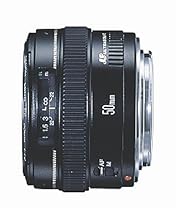
Canon EF 50mm f1.4 USM Standard & Medium Telephoto Lens for Canon SLR Cameras


Why spend more?5

With the 50mm f1.8 lens available for less than a hundred dollars why spend so much more to get the f1.4? The answer is you may not need to. It all depends on your seriousness budget and how long you need your lens to last.


If you want a "starter lens" for shooting at 50mm (or with prime lenses in general) the f1.8 would be a great buy. 50mm is a very useful and intuitive focal length to spend some time with because it sees the world at the same distance as your naked eye (regardless of your camera's crop factor). So you could buy the f1.8 cheaply regard it as a "play with it" lens and get a nice introduction to "prime lens quality." The f1.8 will seem like a substantial step up from kit lenses and most consumer-priced zooms and amazing bang for few bucks.


So if the f1.8 is such a great bargain why would the f1.4 be among Canon's most all-time popular lenses? It's that the f1.8 can take the great shot within certain conditions but the f1.4 delivers within a much wider range of conditions. In other words "You get what you pay for" and we'll save the best for last.


Affordable-but-Solid Contruction: The f1.4 will likely have a much longer life than the cheaper plastic build of the f1.8 and retain more resale value. It's an investment rather than a commodity. And it'll be more certain on your camera and in your hand. (My first one finally needed some calibration after 80000 shots and extreme wear-and-tear from frequent swapping with my other primes.) Users sometimes report the front glass falling out of their f1.8s. For the f1.4 the main issues revolve around the Micro USM focus motor which is not as sturdy as true USM.


Focus Versatility: The f1.4 lets your camera autofocus and then lets you tweak further by hand without flipping a switch - that's called "Full-Time Manual Focus." The f1.8 requires switching back and forth between auto and manual focus. The f1.8 is famously noisy/buzzy during autofocus has a bare-minimum focus ring and no distance scale. The f1.4 will autofocus more reliably especially in dim light though it will fail occasionally when starved.


Resistance to Abberation: Chromatic abberation (fringe colors) and barrel distortion are evident-but-low for both lenses at wide apertures - that's "prime lens quality." But in comparison tests the f1.8 is more susceptible to vignetting (shadows around the corners) halation (glowing around the highlights) and lens flare. For instance lens flare within the f1.4 tends to be more tightly controlled - "in focus" - whereas a bright light source is more like to blow out the whole shot in the f1.8. All these factors improve when stopped down but lag about a stop behind the f1.4.


Color: However if the f1.8 catches up at f/8 to the f1.4 by many standards it rarely catches up to the f1.4's saturation. The f1.4 has "proper-to-strong" color richness at all but the widest apertures while the f1.8's shots are much more likely to require postwork. (I do however get better saturation from my 24mm f2.8 and 100mm Macro f2.8. The 50 f1.4's saturation seems good-not-great by comparison.)


"Headroom": The engineering of both lenses lets you choose the tradeoff between "most possible light" or "most possible clarity." It's by design that you can choose "more light for less crisp" or stop down for sharpness. *Samples vary* but the average 50mm f1.4 should consistently "get down to sharp" more quickly "sharp enough" by f/2.0 "very very sharp" by f/2.8 (often exceeding the professional 24-70mm f2.8 L when wide open) and delivering "unreal sharp" by f/4. (I saw insane "specks of mascara sharpness" at f/3.5 from my first f1.4.) Again the f1.8 will probably lag about a stop behind that curve.


My second 50mm f1.4 performed even better than my first right out of the box "marginally sharp" at f/1.4 and increasingly beyond reproach by f/1.8-2. (At f/1.4-1.6 it suffers only from halation and some light fall-off in darker areas.) So if extreme sharpness is necessary for you shop with a strategy that will let you return your lens or get it calibrated if not up to your needs. My guess is that my first one was more typical out of the box but it approached the performance of the second after calibration.


(It's also worth noting that the premium-priced 50mm f1.2L is drastically more sharp (and better performing generally) at wide apertures but *less* sharp at f/2.8 through f/8. The f1.4 is a better "walkaround" performer than the f1.2L lens that costs four times as much.)


Regarding light return specifically my own experience in lens-swapping baffled me until I read other reports that the f1.4 exposes a third of a stop brighter than most other Canon lenses. It's brighter in the viewfinder generally and really IS a whole stop "faster" than the f1.8 at maximum apertures (i.e. the same net exposure at half the shutter speed). If you're willing to sacrifice some clarity that extra stop can make a huge difference when you're challenged by moving targets in low light.


(For instance shooting "wide open" for performers in dim venues. Faster shutter for less motion blur. More light for better color. And the edges may be soft at 100% magnification but *relatively* clear compared to the out-of-focus background. That "illusion of clarity" isn't as likely to print very well but resizes very snappily for the web.)


So the f1.8 can certainly produce some stunning images particularly in general daylight photography OR tightly-controlled conditions OR stopped down but is less adaptable to challenging circumstances that the f1.4.


"The Best for Last...":


Now with both these lenses you get the advantage of marvelously wide aperture which can be used for a tight focal plane that lets the background (or foreground distractions) fall quickly out of focus. This is of course a cornerstone of creative photography and both lenses give you plenty to explore. (In practice even f/2.8 delivers a pretty shallow depth of field in close-up shots so these wider lenses give you even more room to play.)


However there is such a thing as "blur quality" called "bokeh" based on the number of aperture blades within the lens. The f1.8 has five and the f1.4 has eight. The f1.8 will portray out-of-focus lights more pentagonally the f1.4 more roundly. (In focus those same lights will be eight-pointed stars with the f1.4 ten-pointed with the f1.8 - odd numbers of blades double the number of points.) But most importantly the blur from the f1.8 can be rather "choppy" especially at wide apertures while the f1.4's is consistently more "buttery smooth."


In other words there's more to quality than sharpness - there's also quality where your shot is LESS than sharp. And this is where the f1.4 becomes "a favorite lens" for some people even at over three times the price of its diminuitive counterpart.


Make no mistake the f1.8 would make an excellent "starter" lens. But the f1.4 is an exceptionally *serious* lens. Are you still learning to love photography? Then $80 is a fine price to pay for a lens you might outgrow. Or do you already love photography? Then $300 is a worthy price for a true investment that will reliably pay off. So they're both bargains just buy what's best for you.


(Addendum - Canon also sells a 50mm f2.5 Macro lens around $250. If you NEED macro it's reportedly pretty good and for general purpose as well. But it's a) not even as fast as the f1.8 b) more difficult to manually focus than the f1.4 and c) not as creamy in the bokeh with six aperture blades instead of eight. And Canon's 100mm version is drastically more practical for macro work and better performing generally. But the 50mm Macro does become a contender at a "middle price" if what you really need is one decent lens to do as many different things as possible though none of them as well.)More detail ...

Canon 5D and 30D Cameras Lenses and Accessories


[]More detail ...

Nikon 55-200mm f/4-5.6G ED IF AF-S DX VR [Vibration Reduction] Zoom Nikkor Lens


Incredible Bargain - Sharp Lens with VR for $250!5

This lens is sharp even at wide apertures the VR (image stabilization) works great autofocus speed is more than acceptable and it it is very light and compact. The fact that it costs $250 and has effective VR is pretty amazing - no other company offers a lens with this feature for anywhere near this price.


As for image quality search the various internet photo sites such as dpreview and nikonians for sample photos taken with this lens by real users. The results are impressive! My copy produces similar results. The previous reviewer must have a bad sample.


Of course the lens is slow (like almost all consumer zoom lenses) in that its widest aperture is smaller than a professional zoom or prime lens so it's not a good choice for action photography in lower light conditions (like indoor sports without flash or outside sports at dusk). But a fast telephoto zoom will cost at least three times as much and weigh a ton.

I give the lens 5 stars based on a combination of image quality value and compactness/lightness.More detail ...

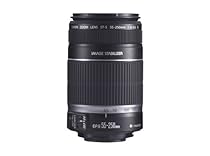
Canon EF-S 55-250mm f/4.0-5.6 IS Telephoto Zoom Lens for Canon Digital SLR Cameras


I Love It For IS and Zoom Range at this Price Not Pure Performance5

I was determined to love this lens based on the specs and price point alone. Canon really needed to come out with this lens at this price because Nikon offers a very decent Vibration Reduction lens at roughly the same range for the same price leaving me to make apologies for Canon and their neglect to all my Nikon friends.


The IS can be switched off to save battery life but I haven't noticed a difference in battery performance with it. The IS is only activiated when you press the shutter halfway for auto focus. Although it FEELS like there is a small lag for the IS to start I don't think I've had any photos messed up because of it.


You can HEAR the IS. A little bizarre after using point and shoots that have IS that is silent but it doesn't seem to affect performance


Pro: Great price for an image stabilized zoom lens. I paid 299 and am very pleased even though Amazon is selling it for 280 a week later. ALso arrive 2 months sooner than Amazon initially promised. This lens has NEVER been 400 dollars. Its MSRP from Canon prior to release was 299.00. Shame Amazon!


Pro: Images are very sharp.


Pro: Image stabilization does a VERY nice job. Four stops as advertised by Canon? I'm not so sure. GREATLY enhancing the composition experience at 250mm? Absolutely.


Pro: Much smaller and lighter than the 70-300 of any manufacturer and much sharper than my Sigma 70-300.


Con: Cheapish feel. But just use it quit feeling it already. Plastic mount. But if you NEED a metal mount may I suggest you are being a little rough with your camera. *UPDATE* The plastic flanges on back were able to hold the camera securely to the lens but NOT hold the rear cap securely to the lens. I've tried many different rear lens caps that fit snugly on other lenses. So I think this is beyond cheap feel and has to be called CHEAP BUILD.


Con: This lens is a little (ok maybe not so little) slow to focus in dim light sometimes it misses altogether when I think other lenses of mine would have had no difficulty.


Con: I never gave Inner Focusing much thought on my other lenses until I used this. The front of this lens rotates AND moves in and out a LOT while focusing so much so that you MAY even want to recompose your shot. The length of this lens changes almost an inch across the focus range. I just checked my Sigma 70-300 and found that it does also but I've never seen it make as much difference in the viewfinder as I have with this Canon. Your perception may vary.


This lens and the soon to be arriving 18-55 IS as the XSi kit lens will allow me to carry one less lens to achieve an 18-250 IS range. For a little more money than the cost of both lenses you can get the Tamrom 18-250 but not have Image Stabilization. And now Sigma has an 18-200 WITH Optical Stablization for about what these 2 lenses cost retail but in testing the 2 Canons produced better images.


Conclusion: A great EF-S lens for Canon users. (even if Nikon had to force Canon to make it for us.)More detail ...

Nikon 50mm f/1.8D AF Nikkor Lens for Nikon Digital SLR Cameras


One of the best lens for portrait and low light photography.5

I don't even know where to start. This lens produces sharp pictures and great color and contrast. And for its price (which seems to climb recently) it is worth more than 5 stars rating. I initially get this lens for low light action and sport photography (as this lens is famous for being one of the fastest lens together with its brother 50mm f/1.4) but I also found out that this lens is also perfect for portrait and other general purposes (macro etc). This is definitely a very versatile lens.


As much as I want to encourage everyone to buy this lens right away let me mention some of the limitation that you would see (which I think will be helpful to go over before deciding to buy this lens):


First being a prime lens you will need to move your feet a lot to compose your picture. If you are used to zoom lens don't underestimate this limitation. It takes me a while to get used to it and sometime I still find people looking at me wondering why I am moving forward and backwards. the good news is that most of the time they don't think I'm weird but they are actually wondering if I'm a professional photographer.


Secondly the focal range of 50mm which is considered the normal lens and great for portrait lens. but on many DSLRs which is not full frame (unless you have a full frame Nikon DSLR like the D700 or D3 then 50mm is 50mm) this lens become a 75mm equivalent which is in the border of a short tele lens. I actually like the 75mm equivalent though I often have to move backwards when taking picture of a group of people.


Third in some situation the autofocus might not able to focus (which is common for many other lens too). It is hard for the autofocus to lock when aiming at a wall that is one color (usually black or white) or on a clear sky (day or night). This kind of makes sense to me actually. IN these situations the AF assist light doesn't help either so you can opt for manual focus or set the focus to infinity when you can't find focus lock on scenic/landscape or sky photography. So far I don't have many problems with the autofocus.


Sharpness increases as you stop down to f/2.2 or f/2.5. I actually use f/1.8 most of the time and the results are still nice. Personally I'd rather use f/1.8 aperture settings than stopped down (e.g to f/2.8) and compensate with higher ISO setting which often gives me grainy picture. But if your object is not moving (static) then it is better to stop down to f/2.8 or more.


If you are wondering whether you should get a fast lens or a lens with VR (Vibration Reduction) here's my take: In overall VR does help a lot (as it will reduce camera shake) and will produce better/sharper picture than equivalent lens without VR (especially if the object is static). If the object is moving (sports/action) then VR feature alone might not help (depending on how fast the object is moving and how much light is available) and a fast lens often end up being a far better solution even without VR feature as it will allow much faster shutter speed to freeze motion. Using tripod (and a remote) will substitute for the need of VR feature. In general I would recommend getting a fast lens with VR feature (and usually it is expensive) such as the 70-200 f/2.8 VR but if one can only get for one or the other then find out what do you want to use the lens for and then use the guideline mentioned here.


If you are wondering whether you will get the benefit of buying f/1.4 lens over a f/1.8 lens just remember that the f/1.4 lens is about 60% faster than f/1.8 at its widest aperture setting. With this information you can decide if the additional speed will justify the additional cost. The bokeh is nicer as well in f/1.4 lens but I think speed is usually the main factor in deciding whether to get the more expensive f/1.4 lens.


Here are the summary of pros and cons for this Nikon 50mm f/1.8D AF lens:


Pros:

1. Very fast (f/1.8)

2. Very sharp pictures (especially when stopped down to f/2.2 f/2.5 or more.)

3. Great for sport/action photography

4. Great for indoor and low light situation

5. Great for portrait

6. Bokeh is almost as good as many expensive Nikon tele-lens

7. Fast autofocus

8. Good for wedding photography (or no-flash event). However if this is your main objective then you might want to get the 50mm f/1.4 version or 28-70mm f/2.8 lens)

9. 75mm equivalent which can be considered a short tele lens (I actually like the fact that it's 75mm equivalent vs 50mm in DSLR. if you need more zoom you can get the Nikon 85mm f/1.8 or the 70-200mm f/2.8 VR). If you have full frame DSLR(like the D3 or D700) then this #9 pros is not applicable.

10. Inexpensive


Cons:

1. Being prime lens you need to move your feet a lot to adjust/compose

2. Autofocus issue on some situations (read detail above)

3. Plasticy build

4. Autofocus is not the most silent but very reasonable

5. 75mm equivalent with 1.5x multiplier on non full frame DSLR (many people find this is an odd range for normal lens. I actually like it). If you have full frame DSLR(like the D3 or D700) then this #5 cons is not applicable.

6. Autofocus does not work with D40 D40x D60 and D5000. The newer 50mm f/1.4G AF-S lens or 35mm f/1.8G AF-S lens will autofocus with those cameras.


Bottom line: This lens is so versatile (and inexpensive) that I think everyone should own in addition to all the lenses that they already have. Being a very fast lens it enables me to take pictures in low light (sport/action photography) that I otherwise wouldn't be able to do.

After knowing its limitation I would predict that 99% of you that decides to buy this lens will find this lens very useful. And if you decide that you don't like it (which I think not more than 1%) I'm sure there will be a lot of people who wouldn't mind buying it from you (with some discount of course).


Again I would recommend everyone to get this lens. In some ways I can say that this lens makes me a better photographer.


Happy Photographing!


Sidarta TanuMore detail ...

Nikon 50mm f/1.8D AF Nikkor Lens for Nikon Digital SLR Cameras


One of the best lens for portrait and low light photography.5

I don't even know where to start. This lens produces sharp pictures and great color and contrast. And for its price (which seems to climb recently) it is worth more than 5 stars rating. I initially get this lens for low light action and sport photography (as this lens is famous for being one of the fastest lens together with its brother 50mm f/1.4) but I also found out that this lens is also perfect for portrait and other general purposes (macro etc). This is definitely a very versatile lens.


As much as I want to encourage everyone to buy this lens right away let me mention some of the limitation that you would see (which I think will be helpful to go over before deciding to buy this lens):


First being a prime lens you will need to move your feet a lot to compose your picture. If you are used to zoom lens don't underestimate this limitation. It takes me a while to get used to it and sometime I still find people looking at me wondering why I am moving forward and backwards. the good news is that most of the time they don't think I'm weird but they are actually wondering if I'm a professional photographer.


Secondly the focal range of 50mm which is considered the normal lens and great for portrait lens. but on many DSLRs which is not full frame (unless you have a full frame Nikon DSLR like the D700 or D3 then 50mm is 50mm) this lens become a 75mm equivalent which is in the border of a short tele lens. I actually like the 75mm equivalent though I often have to move backwards when taking picture of a group of people.


Third in some situation the autofocus might not able to focus (which is common for many other lens too). It is hard for the autofocus to lock when aiming at a wall that is one color (usually black or white) or on a clear sky (day or night). This kind of makes sense to me actually. IN these situations the AF assist light doesn't help either so you can opt for manual focus or set the focus to infinity when you can't find focus lock on scenic/landscape or sky photography. So far I don't have many problems with the autofocus.


Sharpness increases as you stop down to f/2.2 or f/2.5. I actually use f/1.8 most of the time and the results are still nice. Personally I'd rather use f/1.8 aperture settings than stopped down (e.g to f/2.8) and compensate with higher ISO setting which often gives me grainy picture. But if your object is not moving (static) then it is better to stop down to f/2.8 or more.


If you are wondering whether you should get a fast lens or a lens with VR (Vibration Reduction) here's my take: In overall VR does help a lot (as it will reduce camera shake) and will produce better/sharper picture than equivalent lens without VR (especially if the object is static). If the object is moving (sports/action) then VR feature alone might not help (depending on how fast the object is moving and how much light is available) and a fast lens often end up being a far better solution even without VR feature as it will allow much faster shutter speed to freeze motion. Using tripod (and a remote) will substitute for the need of VR feature. In general I would recommend getting a fast lens with VR feature (and usually it is expensive) such as the 70-200 f/2.8 VR but if one can only get for one or the other then find out what do you want to use the lens for and then use the guideline mentioned here.


If you are wondering whether you will get the benefit of buying f/1.4 lens over a f/1.8 lens just remember that the f/1.4 lens is about 60% faster than f/1.8 at its widest aperture setting. With this information you can decide if the additional speed will justify the additional cost. The bokeh is nicer as well in f/1.4 lens but I think speed is usually the main factor in deciding whether to get the more expensive f/1.4 lens.


Here are the summary of pros and cons for this Nikon 50mm f/1.8D AF lens:


Pros:

1. Very fast (f/1.8)

2. Very sharp pictures (especially when stopped down to f/2.2 f/2.5 or more.)

3. Great for sport/action photography

4. Great for indoor and low light situation

5. Great for portrait

6. Bokeh is almost as good as many expensive Nikon tele-lens

7. Fast autofocus

8. Good for wedding photography (or no-flash event). However if this is your main objective then you might want to get the 50mm f/1.4 version or 28-70mm f/2.8 lens)

9. 75mm equivalent which can be considered a short tele lens (I actually like the fact that it's 75mm equivalent vs 50mm in DSLR. if you need more zoom you can get the Nikon 85mm f/1.8 or the 70-200mm f/2.8 VR). If you have full frame DSLR(like the D3 or D700) then this #9 pros is not applicable.

10. Inexpensive


Cons:

1. Being prime lens you need to move your feet a lot to adjust/compose

2. Autofocus issue on some situations (read detail above)

3. Plasticy build

4. Autofocus is not the most silent but very reasonable

5. 75mm equivalent with 1.5x multiplier on non full frame DSLR (many people find this is an odd range for normal lens. I actually like it). If you have full frame DSLR(like the D3 or D700) then this #5 cons is not applicable.

6. Autofocus does not work with D40 D40x D60 and D5000. The newer 50mm f/1.4G AF-S lens or 35mm f/1.8G AF-S lens will autofocus with those cameras.


Bottom line: This lens is so versatile (and inexpensive) that I think everyone should own in addition to all the lenses that they already have. Being a very fast lens it enables me to take pictures in low light (sport/action photography) that I otherwise wouldn't be able to do.

After knowing its limitation I would predict that 99% of you that decides to buy this lens will find this lens very useful. And if you decide that you don't like it (which I think not more than 1%) I'm sure there will be a lot of people who wouldn't mind buying it from you (with some discount of course).


Again I would recommend everyone to get this lens. In some ways I can say that this lens makes me a better photographer.


Happy Photographing!


Sidarta TanuMore detail ...

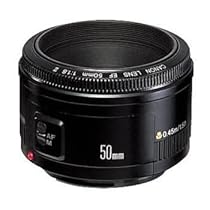
Canon EF 50mm f/1.8 II Camera Lens

This is considered the standard lens for use with Canon SLR camerasMore detail ...